PART 6
ENTRY AND QUALIFICATION
75 ENTERING A RACE
75.1 To enter a race, a boat shall comply with the requirement of the organizing authority of the race. She shall be entered by
(a) a member of a club or other organization affiliated to a World Sailing member national authority.
(b) such a club or organization, or
(c) a member of a World Sailing member national authority.
75.2 Competitors shall comply with World Sailing Regulation 19, Eligibility Code.
76 EXCLUSION OF BOATS OR COMPETITORS
76.1 The organizing authority or the race committee my reject or cancel the entry of a boat or exclude a competitor, subject to rule 76.3, provided it does so before the start of the first race and states the reson for doing so. On request the boat shall promptly be given the reson in writing. The boat may request redress if she considers that the rejection or exclusion is improper.
76.2 The organizing authority or the race committee shall not reject or cancel the entry of a boat or exclude a competitor because of advertising, provided the boat or compettitor complies with World Sailing Regulation 20, Advertising Code.
76.3 At world and continental championships no entry within stated quotas shall be rejected or cancelled without first obtaining the approval of the relevant World Sailing Class Association (or the Offshore Racing Council) or World Sailing.
77 IDENTIFICATION ON SAILS
A boat shall comply with the requirements of Appendix G governing class insignia, national letters and numbers on sails.
78 COMPILANCE WITH CLASS RULES; CERTIFICATES
78.1 While a boat is racing, her owner and any other person in charge shall ensure that the boat is maintained to comply with her class rules and that her measurement or rating certificate, if any, remains valid. In addition, the boat shall also comply at other times specified in the class rules, the notice of race or the sailing instructions.
78.2 When a rule requires a valid certificate to be produced or its existence verified before a boat races, and this cannot be done, the boat may race provided that the race committee receives a statement signed by the person in charge that a valid certificate exist. The boat shall produce the certificate or arrange for its existence to be verified by the race committee. The penalty for breaking this rule is disqualification without a hearing from all races of the event.
79 CLASSIFICATION
If the notice of race or class rules state that some or all competitiors must satisfy classification requirement, the classification shall be carried out as described in World Sailing Regulation 22, Sailor Classification Code.
80 ADVERTISING
A boat and her crew shall comply with World Sailing Regulation 20, Advertising Code.
81 RESCHEDULED EVENT
When an event is rescheduled to dates different from the date stated in the notice of race, all boats entered shall be notified. The race committee may accept new entries that meet all the entry requirements except the original deadline for entries.

9/21/2019


RRS2017-2020 : PART 5 PROTEST, REDRESS, HEARINGS, MISCONDUCT AND APPEALS
PART 5 PROTEST, REDRESS, HEARINGS, MISCONDUCT AND APPEALS
SECTION A
PROTEST; REDRESS; RULE 69 ACTION
60 RIGHT TO PROTEST; RIGHT TO REQUEST REDRESS OR RULE 69 ACTION
60.1 A boat may
(a) protest another boat, but not for an alleged breach of a rule of Part 2 or rule 31 unless she was involved in or saw the incident; or
(b) request redress.
60.2 A race committee may
(a) protest a boat, but not as result of information arising from a request for redress or an invalid protest, or from a report from a person with a conflict of interest other than the representative of the boat herself;
(b) request redress for a boat; or
(c) report to the protest committee requesting action under rule 69.2(b)
60.3 A protest committee may
(a) protest a boat, but not as a result of information arising from a request for redress or an invalid protest, or from a report from a person with a conflict of interest other than the representative of the boat herself. However, it may protest a boat.
--- (1) if it learns of an incident involving her that may have resulted in injury or serious damage, or
--- (2) if during the hearing of a valid protest it learns that the boat, although not a party to the hearing, was involved in the incident and may have broken a rule;
(b) call a hearing to consider redress;
(c) act under rule 69.2(b); or
(d) call a hearing to consider whether a support person has broken a rule, based on its own observation or information or information received from any source, including evidence taken during a hearing.
60.4 A techical committee may
(a) protest a boat, but not as a result information arising from a request for redress or an invalid protest, or from a report from a person with a conflict of interest other than the representative of the boat herself. However, it shall protest a boat if it decides that
--- (1) a boat has broken a rule of Part 4, but not rules 41, 42, 44 and 46, or
--- (2) a boat or personal equipment does not comply with the class rules;
(b) request redress for a boat; or
(c) report to the protest committee request action under rule 69.2(b)
60.5 Hower, neither a boat nor a committee may protest for an alleged breach of rule 5, 6, 7 or 69.
61 PROTEST REQUIREMENTS
61.1 Informing the Protest
(a) A boat intending to protest shall inform the other boat at the first resonable opportunity. When her protest will concern an incident in the racing area she was involved in or saw, she shall hail 'Protest' and conspicuously display a red flag at the first reasonable opportunity for each. She shall display the flag until she is no longer racing. However,
--- (1) if the other boat is beyond hailing distance, the protesting boat need not hail but she shall inform the other boat a the first reasonalbe opportunity;
--- (2) if the hull length of the protesting boat is less than 6 metres, she need not display a red flag;
--- (3) if the incident was an error by the other boat in sailing the course, she need not hail or display a red flag but she shall inform the other boat either before or at the first reasonable opportunity after the orther boat finishes;
--- (4) if as a result of the incident a menber of either crew is in danger, or there is injury or serious damage that is obvious to the boat intending to protest, the requirements of this rule do not apply to ther, but she shall attempt to inform the other boat within the time limit of rule 61.3.
(b) if the race committee, technical committee or protest committee intends to protest a boat concerning an incident the committee observed in the racing area, it shall inform her after the race within the time limit of rule 61.3. In other cases the committee shall inform the boat of its intention to protest as soon as reasonably possible.
(c) if the protest committee decides to protest a boat under rule 60.3(a)(2), it shall inform her as soon as reasonably possible, close the current hearing, proceed as required by rules 61.2 and 653, and hear the original and the new protest together.
61.2 Protest Contents
A protest shall be in writing and identify
(a) the protestor and protestee;
(b) the incident;
(c) where and when the incident occurred;
(d) any rule the protestor believes was broken; and
(e) the name of the protestor's representative.
However, if requirement (b) is met, requirement (a) may be met at any time before the hearing, and requirement (d) and (e) may be met before or during the hearing. Requirement (c) may also be met before or during the hearing, provided the protestee is allowed reasonable time to prepare for the hearing.
61.3 Protest Time Limit
A protest by a boat, or by the race committee, technical committee or protest committee about an incident the committee observed in the racing area, shall be delivered to the race office within the protest time limit stated in the sailing structions. If non is stated, the time limit is two hours after the last boat in the race finishes. Other race committee, technical committee or protest committee protest shall be delivered to the race office no later than two hours after the committee receives the relevant information. The protest committee shall extend the time if there is good reason to do so.
62 REDRESS
62.1 A request for redress or a protest committee's decision to consider redress shall be based on a claim or possibility that a boat's score or place in a race or series has been or may be, through no fault of her own, made significantly worse by
(a) a improper action or omission of the race committee, protest committee, organizing aouthority or technical committee for the even, but not by a protest committee decision when the boat was a party to the hearing;
(b) imjury or physical damage because of the action of a boat that was breaking a rule of Part 2 or of a vessel not racing that was required to keep clear;
(c) giving help (except to herself or her crew) in compliance with rule 1.1; or
(d) an action of a boat, or amember of her crew, that resulted in a penalty under rule 2 or apenalty or warning under rule 69.2(h).
(d) an action of a boat, or member of her crew, that resulted in a penalty under rule 2 or a penalty or warning under rule 69.2(h).
62.2 A request shall be in writing and identify the reason for making it. If the request is based on an incident in the racing area, it shall be delivered to the race office within the protest time limit or two hours after the incident, whichever is later. Other request shall be delivered as soon as reasonably possible after learning of the reasons for making the request. The protest committee shall extend the time if there is good reason to do so. No red flag is required.
SECTION B
HEARING AND DECISIONS
63 HEARINGS
63.1 Requirement for a Hearing
A boat or competitor shall not be penalized without a protest hearing, except as provided in rules 30.2, 30.3 30.4, 64.3(d), 69, 78.2 A5 and P2. A decision on redress shall not be made without a hearing. The protest committee shall hear all protests and request for redress that have been delivered to the race office unless it allows a protest or request to be withdrawn.
63.2 Time and Place of the Hearing; Time for Parties to Prepare
All parties to the hearing shall be notified of the time and place of the hearing, the protest or redress information shall be made available to them, and thy shall be allowed reasonable time to prepare for the hearing.
63.3 Right to Be Present
(a) A presentative of each party to the hearing has the right to be present throughout the hearing of all the evidence. When a protest claims a breach of a rule of Part 2, 3 or 4, the representatives of boats shall have been on board at the time of the incident, unless there is good reason for the protest committee to rule otherwise. Any witness, orther than a member of the protest committee, shall be excluded except when giving evidence.
(b) If a party to the hearing of a protest or request for redress does not come to the haring, the protest committee may nevertheless decide the protest or request. If the party was unavoidably absent, the committee may reopen the hearing.
63.4 Conflict of Interest
(a) A protest committee member shall declare any possible conflict of interest as soon as he is aware of it. A party to the hearing who believes a member of the protest committee has a conflict fo interest declared by a protest committee member shall be included in the written information provided under rule 65.2.
(b) A member of a protest committee with a conflict of interest shall not be a member of the committee for the hearing, unless
--- (1) all parties consent, or
--- (2) the protest committee decides that the conflict of interest is not significant.
(c) When deciding whether a conflict of interest is significant, the protest committee shall consider the views of the parties, the level of the conflict, the level of the event, the importance to each party, and the overall perception of fairness.
(d) However, for World Sailing major events, or for other events as prescribed by the national authority of the venue, rule 63.4(b) does not apply and a person who has a conflict of interest shall not be a member of the protest committee.
63.5 Validity of the Protest or Request for Redress
At the beginning of the hearing the protest committee shall take any evidence it considers neccessary to decide whether all requirements for the protest or request for redress have been met. If thy have been met, the protest or request is valid and the hearing shall be continued. If not, the committee shall declare the protest or request invalid and close the hearing. If the protest has been made under rule 60.3(a) (1), the committee shall also determine whether or not injury or serious damage resulted from the incident in questin. If not, the hearing shall be closed.
63.6 Taking Evidence and Finding Facts
The protest committee shall take the evidence of the parties present at the hearing and of their witness and other evidence it considers necessary. A member of the protest committee who saw the incident shall, while the parties are present, state that fact and may give evidence. A party present at the hearing may question any person who gives evidence. The committee shall then find the facts and base its decision on them.
63.7 Conflict Between Rules
If there is a conflict between two or more rules that must be resolved before the protest committee makes a decision, the committee shall apply the rule that it believes will provide the fairest result for all boats affected. Rule 63.7 applies only if the conflic is between rules in the notice of race, The sailing instructions, or any of the other documents that govern the event under item (g) of the definition Rule.
63.8 Protest Between Boat in Different Races
A protest between boats sailing in different races conducted by different organizing authorities shall be heard by a protest committee acceptable to those authorities.
64 DECISIONS
64.1 Penaltiesa and Exoneration
When the protest committtee decides that a boat that is a party to a protest hearing has broken a rule and is not exonerated, it shall disqualify her unless some other penalty applies. A penalty shall be imposed whether or not the applicable rule was mentioned in the protest. If a boat has broken a rule when not racing, her penalty shall apply to the race sailed nearst in time to that of the incident. However,
(a) when as a consequence of breaking a rule a boat has compelled another boat to break a rule, the other boat shall be exonerated.
(b) if a boat has taken an applicable penalty, she shall not be further penalized under this rule unless the penalty for a rule she broke is disqualification that is not excludable from her series score.
(c) if the race is restarted or resailed, rule 36 applies.
64.2 Decisions on Redress
When the protest committee decides that a boat is entitled to redress under rule 62, it shall make as fair an arrangement as possible for all boats affected, whether or not they asked for redress. This may be to adjust the scoring (see rule A10 for some examples) or finishing times of boats, to abandon the race, to let the results atnad or to make some other arrangement. When in doubt about the fact or probable result of any arrangement for the race or series, especially before abandoning the race, the protest committee shall take evidence from appropriate sources.
64.3 Decisions on Protests Concerning Class Rules
(a) When the protest committee finds that deviations in excess of tolerances specified in the class rules were caused by damage or normal wear and do not improve the performance of the boat, it shall not penalize her. However, the boat shall not race again until the deviations have been corrected, except when the potest committee decides there is or has been no resonalble opportunity to do so.
(b) When the protest committee is in doubt about the meaning of a class rule, it shall refer its questions, together with the relevant facts, to an authority responsible for interpreting the rule. In making its decision, the committee shall be bound by the reply of the authority.
(c) When a boat is penalized under a class rule and the protest committee decides that the boat also broke the same rule in earlier races in the same event, the penalty may be imposed for all such races. No further protest is necessary.
(d) When a boat penalized under a class rule states in writing that she intends to appeal, she may compete in subsequent races without changes to the boat. However, if she fails to appeal or the appeal is decided against her, she shall be desqualified without a further hearing from all subsequent races in which she competed.
(c) Measument costs arising from a protest infolving a class rule shall be paid by the unsuccessful party unless the protest committee decides otherwise.
64.4 Decisions Concerning Support Persons
(a) When the protest committee decides that a support person who is a party to a hearing has broken a rule, it may
--- (1) issue a warning,
--- (2) exclude the person from the event or venue or remove any priviletes or benefits, or
--- (3) take other action within its jurisdiction as provided by the rules.
(b) The protest committee may also penalize a competitor for the breach of a rule by a support person by changing the boat's score in a single race, up to and including DSQ, when the protest committee decides that
--- (1) the competitor may have gained a competitive advantage as the result of the breach by the support person, or
--- (2) the support person commits a further breach after the competitor has been waned by the protest committee that a penalty may be imposed.
65 INFORMING THE PARTIES AND OTHERS
65.1 After making its decision, the protest committee shall promptly inform the parties to the hearing of the facts found, the applicable rules, the decision the reasons for it, and any penalties imposed or redress given.
65.2 A party to the hearing is entitled to receive the above information in writing, provided she asks for it in writing from the protest committee no later than seven days after being informed of the decision. The committee shall then promptly provide the information, including, when relevant, a diagram of the incident prepared or endorsed by the committee.
65.3 When the protest committee penalizes a boat under a class rule, it shall send the above information to the relevant class rule authorities.
66 REOPENING A HEARING
The protest committee may reopen a hearing when it secides that it may have made a significant error, or when significant new evidence ecomes available within a reasonable time. It shall reopen a hearing when required by the national authority under rule 71.2 or R5. A party to the hearing may ask for a reopening no later than 24 hours after being informed of the decision. On the last scheduled day of racing the request shall be delivered.
(a) within the protest time limit if the requesting party was informed of the decision on the previous day;
(b) no later than 30 minutes after the party was informed of the decision on that day.
When a hearing is reopened, a majority of the member of the protest committee shall, if possible, be members of the original protest committee.
67 DAMAGES
The question of damages arising from a breach of an rule shall be governed by the prescriptions, if any, of the national authority.
Note: There is no rule 68.
SECTION C
MISCONDUCT
659 MISCONDUCT
69.1 Obligation not to Commit Misconduct; Resolution
(a) A competior, boat owner or support person shall not commit an act of misconduct.
(b) Misconduct is :
--- (1) conduct that is breach of good manners, a breach of good sportsmanship, or unethical behaviour; or
--- (2) conduct that may bring the sport into disrepute.
(c) An allegation of a breach of rule 69.1(a) shall be resolved in accordance with the provisions of rule 69. It shall not be grounds for a protest and rule 63.1 does not apply.
69.2 Action by a Protest Committee
(a) A protest committee acting under this rule shall have at least three members.
(b) When a protest committee, from its own observation or from information received from any source, including evidence taken during a hearing, believes a person may have broken rule 69.1(a), it shall decide whether or not to call a hearing.
(c) When the protest committee needs more information to make the decision to call a hearing, it shall consider appointing a person or persons to conduct an investigation. These investigators shall not be members of the protest committee that will decide the matter.
(d) When an investigator is appointed, all relevant information he gathers, favourable or unfavourable, shall be disclosed to the protest committee, and if the protest committee decides to all a hearing, to the parties.
(e) If the protest committee decides to call a hearing, it shall promptly inform the person in writing of the alleged breach and of the time and place of the hearing and follow the procedures in rules 63.2, 63.3(a), 63.4 and 63.6 except that
--- (1) unless a person has been appointed by World Sailing, a person may be appointed by the protest committee to present the allegation.
--- (2) a person against whom an allegation has been made under this rule shall be entitled to have an advisor and a representative with him who may act on his behalf.
(f) If the person is unable to attend the hearing and
--- (1) provides good reason, the protest committee shall reschedule it; or
--- (2) does not provide good reason and does not come to it, the protest committee may conduct it without the person present.
(g) The standard of proff to be applied is the test of the comfortable satisfaction of the protest committee, bearing in mind the seriousness of the alleged misconfuct. However, if the standard of proof in this rule conflicts with the laws of a country, the national authority may, with the approval of World Sailing, change it with a prescription to this rule.
(h) When the protest committee decides that a competitor or boat owner has broken rule 69.1(a), it may take one or more of the following actions
--- (1) issue a warning;
--- (2) change the boat's score in one or more races, including disqualification(s) that may or may not be excluded from her series score;
--- (3) exclude the person from the event or venue or remove any privileges or benefits; and
--- (4) take any other action within its jurisdiction as provided by the rules.
(i) When the protest committee decides that a support person has broken rule 69, rule 64.4 applies
(j) If the protest committee
--- (1) imposes a penalty greater than on DNE;
--- (2) excludes the person from the event or venue; or
--- (3) in any other case if it considers it appropriate,
it shall report its findings, including the facts found, its conclusion and decision to the national authority of the person or, for specific international event listed in the World Sailing Regulations, to World Sailing. If the protest committee has acted under rule 69.2(f)(2), the report shall also include that fact and the resons for it.
(k) If the protest committee decides not to conduct the hearing without the person present, or if the protest committee has left the event and a report alleging a reach of rule 69.1(a) is received, the race committee or organizing authority may appoint the same or a new protest committee to proceed under this rule. If it is impractical for the protest committee to conduct a hearing, it shall collect all available information and, if the allegation seems justified, make a report to the national authority of the person or, for specific international events listed in the World Sailing Regulations, to World Sailing.
69.3 Action by a National Authority and World Sailing
The disciplinary powers, procedures and responsibilities of national authorities and World Sailing that apply are specified in World Sailing Regulation 35, Disciplinary Code. National authorities and World Sailing may impose further penalties, including suspension of eligibility, under the regulation.
SECTION D
APPEALS
70 APPEALS AND REQUESTS TO A NATIONAL AUTHORITY
70.1 (a) Provided that the right of appeal has not been denied under rule 70.5, a party to a hearing may appeal a protest committee's decision or its procedures, but not the facts found.
(b) A boat may appeal when she is denied a hearing required by rule 63.1
70.2 A protest committee may request confirmation or correction of its decision.
70.3 An appeal under rule 70.1 or request by a protest committee under rule 70.2 shall be sent to the national authority with the organizing suthority is associated under rule 89.1. However, if boats will pass through the waters of more than one national authority while racing, the sailing instructions shall identify the national authority to which appeals or request are required to be sent.
70.4 A club or other organization affiliated to national authority may request an interpretation of the rules, provided that no protest or request for redress that may be appealed is involved. The interpretation shall not be used for changing a previous protest committee decision.
70.5 There shall be no appeal from the decisions of an international jury constituted in compliance with Appendix N. Furthermore, if the notice of race and the sailing instructions so state, the right of appeal may be denied provided that
(a) it is essential to determine promptly the result of a race that will qualify a boat to compete in a later state of an event or a subsequent event (a national authority may prescribe that its approval is required for such a procedure);
(b) a national authority so approves for a particular event open only to entrants under its own jurisdiction; or
(c) a national authority after consulation with World Sailing so approves for a particular event, provided the protest committee is constituted as required by Appendix N, except that only two members of the protest committee need be International Judges.
70.6 Appeals and request shall conform to Appendix R.
71 NATIONAL AUTHORITY DECISIONS
71.1 A person who has a conflict of interest or was a member of the protest committee shall not take any part in the discussion or decision on an appeal or request for confirmation or correction.
71.2 The national authority may uphold, change or reverse a protest committee's decision including a decision on validity or a decision under rule 69. Alternatively, the national authority may order that a hearing be reopened, or that a new hearing be held by the same or a different protest committee. When the national authority decides that there shall be a new hearing, it may appoint the protest committee.
71.3 When from the facts found by the protest committee the national authority decides that a boat that was a party to a protest hearing broke a rule and is not exonerated, it shall penalize her, whether or not that boat or that rule was mentioned in the protest committee's decision.
71.4 The decision of the national authority shall be final. The national authority shall send its decision in writing to all parties to the hearing and the protest committee, who shall be bound by the decision.
SECTION A
PROTEST; REDRESS; RULE 69 ACTION
60 RIGHT TO PROTEST; RIGHT TO REQUEST REDRESS OR RULE 69 ACTION
60.1 A boat may
(a) protest another boat, but not for an alleged breach of a rule of Part 2 or rule 31 unless she was involved in or saw the incident; or
(b) request redress.
60.2 A race committee may
(a) protest a boat, but not as result of information arising from a request for redress or an invalid protest, or from a report from a person with a conflict of interest other than the representative of the boat herself;
(b) request redress for a boat; or
(c) report to the protest committee requesting action under rule 69.2(b)
60.3 A protest committee may
(a) protest a boat, but not as a result of information arising from a request for redress or an invalid protest, or from a report from a person with a conflict of interest other than the representative of the boat herself. However, it may protest a boat.
--- (1) if it learns of an incident involving her that may have resulted in injury or serious damage, or
--- (2) if during the hearing of a valid protest it learns that the boat, although not a party to the hearing, was involved in the incident and may have broken a rule;
(b) call a hearing to consider redress;
(c) act under rule 69.2(b); or
(d) call a hearing to consider whether a support person has broken a rule, based on its own observation or information or information received from any source, including evidence taken during a hearing.
60.4 A techical committee may
(a) protest a boat, but not as a result information arising from a request for redress or an invalid protest, or from a report from a person with a conflict of interest other than the representative of the boat herself. However, it shall protest a boat if it decides that
--- (1) a boat has broken a rule of Part 4, but not rules 41, 42, 44 and 46, or
--- (2) a boat or personal equipment does not comply with the class rules;
(b) request redress for a boat; or
(c) report to the protest committee request action under rule 69.2(b)
60.5 Hower, neither a boat nor a committee may protest for an alleged breach of rule 5, 6, 7 or 69.
61 PROTEST REQUIREMENTS
61.1 Informing the Protest
(a) A boat intending to protest shall inform the other boat at the first resonable opportunity. When her protest will concern an incident in the racing area she was involved in or saw, she shall hail 'Protest' and conspicuously display a red flag at the first reasonable opportunity for each. She shall display the flag until she is no longer racing. However,
--- (1) if the other boat is beyond hailing distance, the protesting boat need not hail but she shall inform the other boat a the first reasonalbe opportunity;
--- (2) if the hull length of the protesting boat is less than 6 metres, she need not display a red flag;
--- (3) if the incident was an error by the other boat in sailing the course, she need not hail or display a red flag but she shall inform the other boat either before or at the first reasonable opportunity after the orther boat finishes;
--- (4) if as a result of the incident a menber of either crew is in danger, or there is injury or serious damage that is obvious to the boat intending to protest, the requirements of this rule do not apply to ther, but she shall attempt to inform the other boat within the time limit of rule 61.3.
(b) if the race committee, technical committee or protest committee intends to protest a boat concerning an incident the committee observed in the racing area, it shall inform her after the race within the time limit of rule 61.3. In other cases the committee shall inform the boat of its intention to protest as soon as reasonably possible.
(c) if the protest committee decides to protest a boat under rule 60.3(a)(2), it shall inform her as soon as reasonably possible, close the current hearing, proceed as required by rules 61.2 and 653, and hear the original and the new protest together.
61.2 Protest Contents
A protest shall be in writing and identify
(a) the protestor and protestee;
(b) the incident;
(c) where and when the incident occurred;
(d) any rule the protestor believes was broken; and
(e) the name of the protestor's representative.
However, if requirement (b) is met, requirement (a) may be met at any time before the hearing, and requirement (d) and (e) may be met before or during the hearing. Requirement (c) may also be met before or during the hearing, provided the protestee is allowed reasonable time to prepare for the hearing.
61.3 Protest Time Limit
A protest by a boat, or by the race committee, technical committee or protest committee about an incident the committee observed in the racing area, shall be delivered to the race office within the protest time limit stated in the sailing structions. If non is stated, the time limit is two hours after the last boat in the race finishes. Other race committee, technical committee or protest committee protest shall be delivered to the race office no later than two hours after the committee receives the relevant information. The protest committee shall extend the time if there is good reason to do so.
62 REDRESS
62.1 A request for redress or a protest committee's decision to consider redress shall be based on a claim or possibility that a boat's score or place in a race or series has been or may be, through no fault of her own, made significantly worse by
(a) a improper action or omission of the race committee, protest committee, organizing aouthority or technical committee for the even, but not by a protest committee decision when the boat was a party to the hearing;
(b) imjury or physical damage because of the action of a boat that was breaking a rule of Part 2 or of a vessel not racing that was required to keep clear;
(c) giving help (except to herself or her crew) in compliance with rule 1.1; or
(d) an action of a boat, or amember of her crew, that resulted in a penalty under rule 2 or apenalty or warning under rule 69.2(h).
(d) an action of a boat, or member of her crew, that resulted in a penalty under rule 2 or a penalty or warning under rule 69.2(h).
62.2 A request shall be in writing and identify the reason for making it. If the request is based on an incident in the racing area, it shall be delivered to the race office within the protest time limit or two hours after the incident, whichever is later. Other request shall be delivered as soon as reasonably possible after learning of the reasons for making the request. The protest committee shall extend the time if there is good reason to do so. No red flag is required.
SECTION B
HEARING AND DECISIONS
63 HEARINGS
63.1 Requirement for a Hearing
A boat or competitor shall not be penalized without a protest hearing, except as provided in rules 30.2, 30.3 30.4, 64.3(d), 69, 78.2 A5 and P2. A decision on redress shall not be made without a hearing. The protest committee shall hear all protests and request for redress that have been delivered to the race office unless it allows a protest or request to be withdrawn.
63.2 Time and Place of the Hearing; Time for Parties to Prepare
All parties to the hearing shall be notified of the time and place of the hearing, the protest or redress information shall be made available to them, and thy shall be allowed reasonable time to prepare for the hearing.
63.3 Right to Be Present
(a) A presentative of each party to the hearing has the right to be present throughout the hearing of all the evidence. When a protest claims a breach of a rule of Part 2, 3 or 4, the representatives of boats shall have been on board at the time of the incident, unless there is good reason for the protest committee to rule otherwise. Any witness, orther than a member of the protest committee, shall be excluded except when giving evidence.
(b) If a party to the hearing of a protest or request for redress does not come to the haring, the protest committee may nevertheless decide the protest or request. If the party was unavoidably absent, the committee may reopen the hearing.
63.4 Conflict of Interest
(a) A protest committee member shall declare any possible conflict of interest as soon as he is aware of it. A party to the hearing who believes a member of the protest committee has a conflict fo interest declared by a protest committee member shall be included in the written information provided under rule 65.2.
(b) A member of a protest committee with a conflict of interest shall not be a member of the committee for the hearing, unless
--- (1) all parties consent, or
--- (2) the protest committee decides that the conflict of interest is not significant.
(c) When deciding whether a conflict of interest is significant, the protest committee shall consider the views of the parties, the level of the conflict, the level of the event, the importance to each party, and the overall perception of fairness.
(d) However, for World Sailing major events, or for other events as prescribed by the national authority of the venue, rule 63.4(b) does not apply and a person who has a conflict of interest shall not be a member of the protest committee.
63.5 Validity of the Protest or Request for Redress
At the beginning of the hearing the protest committee shall take any evidence it considers neccessary to decide whether all requirements for the protest or request for redress have been met. If thy have been met, the protest or request is valid and the hearing shall be continued. If not, the committee shall declare the protest or request invalid and close the hearing. If the protest has been made under rule 60.3(a) (1), the committee shall also determine whether or not injury or serious damage resulted from the incident in questin. If not, the hearing shall be closed.
63.6 Taking Evidence and Finding Facts
The protest committee shall take the evidence of the parties present at the hearing and of their witness and other evidence it considers necessary. A member of the protest committee who saw the incident shall, while the parties are present, state that fact and may give evidence. A party present at the hearing may question any person who gives evidence. The committee shall then find the facts and base its decision on them.
63.7 Conflict Between Rules
If there is a conflict between two or more rules that must be resolved before the protest committee makes a decision, the committee shall apply the rule that it believes will provide the fairest result for all boats affected. Rule 63.7 applies only if the conflic is between rules in the notice of race, The sailing instructions, or any of the other documents that govern the event under item (g) of the definition Rule.
63.8 Protest Between Boat in Different Races
A protest between boats sailing in different races conducted by different organizing authorities shall be heard by a protest committee acceptable to those authorities.
64 DECISIONS
64.1 Penaltiesa and Exoneration
When the protest committtee decides that a boat that is a party to a protest hearing has broken a rule and is not exonerated, it shall disqualify her unless some other penalty applies. A penalty shall be imposed whether or not the applicable rule was mentioned in the protest. If a boat has broken a rule when not racing, her penalty shall apply to the race sailed nearst in time to that of the incident. However,
(a) when as a consequence of breaking a rule a boat has compelled another boat to break a rule, the other boat shall be exonerated.
(b) if a boat has taken an applicable penalty, she shall not be further penalized under this rule unless the penalty for a rule she broke is disqualification that is not excludable from her series score.
(c) if the race is restarted or resailed, rule 36 applies.
64.2 Decisions on Redress
When the protest committee decides that a boat is entitled to redress under rule 62, it shall make as fair an arrangement as possible for all boats affected, whether or not they asked for redress. This may be to adjust the scoring (see rule A10 for some examples) or finishing times of boats, to abandon the race, to let the results atnad or to make some other arrangement. When in doubt about the fact or probable result of any arrangement for the race or series, especially before abandoning the race, the protest committee shall take evidence from appropriate sources.
64.3 Decisions on Protests Concerning Class Rules
(a) When the protest committee finds that deviations in excess of tolerances specified in the class rules were caused by damage or normal wear and do not improve the performance of the boat, it shall not penalize her. However, the boat shall not race again until the deviations have been corrected, except when the potest committee decides there is or has been no resonalble opportunity to do so.
(b) When the protest committee is in doubt about the meaning of a class rule, it shall refer its questions, together with the relevant facts, to an authority responsible for interpreting the rule. In making its decision, the committee shall be bound by the reply of the authority.
(c) When a boat is penalized under a class rule and the protest committee decides that the boat also broke the same rule in earlier races in the same event, the penalty may be imposed for all such races. No further protest is necessary.
(d) When a boat penalized under a class rule states in writing that she intends to appeal, she may compete in subsequent races without changes to the boat. However, if she fails to appeal or the appeal is decided against her, she shall be desqualified without a further hearing from all subsequent races in which she competed.
(c) Measument costs arising from a protest infolving a class rule shall be paid by the unsuccessful party unless the protest committee decides otherwise.
64.4 Decisions Concerning Support Persons
(a) When the protest committee decides that a support person who is a party to a hearing has broken a rule, it may
--- (1) issue a warning,
--- (2) exclude the person from the event or venue or remove any priviletes or benefits, or
--- (3) take other action within its jurisdiction as provided by the rules.
(b) The protest committee may also penalize a competitor for the breach of a rule by a support person by changing the boat's score in a single race, up to and including DSQ, when the protest committee decides that
--- (1) the competitor may have gained a competitive advantage as the result of the breach by the support person, or
--- (2) the support person commits a further breach after the competitor has been waned by the protest committee that a penalty may be imposed.
65 INFORMING THE PARTIES AND OTHERS
65.1 After making its decision, the protest committee shall promptly inform the parties to the hearing of the facts found, the applicable rules, the decision the reasons for it, and any penalties imposed or redress given.
65.2 A party to the hearing is entitled to receive the above information in writing, provided she asks for it in writing from the protest committee no later than seven days after being informed of the decision. The committee shall then promptly provide the information, including, when relevant, a diagram of the incident prepared or endorsed by the committee.
65.3 When the protest committee penalizes a boat under a class rule, it shall send the above information to the relevant class rule authorities.
66 REOPENING A HEARING
The protest committee may reopen a hearing when it secides that it may have made a significant error, or when significant new evidence ecomes available within a reasonable time. It shall reopen a hearing when required by the national authority under rule 71.2 or R5. A party to the hearing may ask for a reopening no later than 24 hours after being informed of the decision. On the last scheduled day of racing the request shall be delivered.
(a) within the protest time limit if the requesting party was informed of the decision on the previous day;
(b) no later than 30 minutes after the party was informed of the decision on that day.
When a hearing is reopened, a majority of the member of the protest committee shall, if possible, be members of the original protest committee.
67 DAMAGES
The question of damages arising from a breach of an rule shall be governed by the prescriptions, if any, of the national authority.
Note: There is no rule 68.
SECTION C
MISCONDUCT
659 MISCONDUCT
69.1 Obligation not to Commit Misconduct; Resolution
(a) A competior, boat owner or support person shall not commit an act of misconduct.
(b) Misconduct is :
--- (1) conduct that is breach of good manners, a breach of good sportsmanship, or unethical behaviour; or
--- (2) conduct that may bring the sport into disrepute.
(c) An allegation of a breach of rule 69.1(a) shall be resolved in accordance with the provisions of rule 69. It shall not be grounds for a protest and rule 63.1 does not apply.
69.2 Action by a Protest Committee
(a) A protest committee acting under this rule shall have at least three members.
(b) When a protest committee, from its own observation or from information received from any source, including evidence taken during a hearing, believes a person may have broken rule 69.1(a), it shall decide whether or not to call a hearing.
(c) When the protest committee needs more information to make the decision to call a hearing, it shall consider appointing a person or persons to conduct an investigation. These investigators shall not be members of the protest committee that will decide the matter.
(d) When an investigator is appointed, all relevant information he gathers, favourable or unfavourable, shall be disclosed to the protest committee, and if the protest committee decides to all a hearing, to the parties.
(e) If the protest committee decides to call a hearing, it shall promptly inform the person in writing of the alleged breach and of the time and place of the hearing and follow the procedures in rules 63.2, 63.3(a), 63.4 and 63.6 except that
--- (1) unless a person has been appointed by World Sailing, a person may be appointed by the protest committee to present the allegation.
--- (2) a person against whom an allegation has been made under this rule shall be entitled to have an advisor and a representative with him who may act on his behalf.
(f) If the person is unable to attend the hearing and
--- (1) provides good reason, the protest committee shall reschedule it; or
--- (2) does not provide good reason and does not come to it, the protest committee may conduct it without the person present.
(g) The standard of proff to be applied is the test of the comfortable satisfaction of the protest committee, bearing in mind the seriousness of the alleged misconfuct. However, if the standard of proof in this rule conflicts with the laws of a country, the national authority may, with the approval of World Sailing, change it with a prescription to this rule.
(h) When the protest committee decides that a competitor or boat owner has broken rule 69.1(a), it may take one or more of the following actions
--- (1) issue a warning;
--- (2) change the boat's score in one or more races, including disqualification(s) that may or may not be excluded from her series score;
--- (3) exclude the person from the event or venue or remove any privileges or benefits; and
--- (4) take any other action within its jurisdiction as provided by the rules.
(i) When the protest committee decides that a support person has broken rule 69, rule 64.4 applies
(j) If the protest committee
--- (1) imposes a penalty greater than on DNE;
--- (2) excludes the person from the event or venue; or
--- (3) in any other case if it considers it appropriate,
it shall report its findings, including the facts found, its conclusion and decision to the national authority of the person or, for specific international event listed in the World Sailing Regulations, to World Sailing. If the protest committee has acted under rule 69.2(f)(2), the report shall also include that fact and the resons for it.
(k) If the protest committee decides not to conduct the hearing without the person present, or if the protest committee has left the event and a report alleging a reach of rule 69.1(a) is received, the race committee or organizing authority may appoint the same or a new protest committee to proceed under this rule. If it is impractical for the protest committee to conduct a hearing, it shall collect all available information and, if the allegation seems justified, make a report to the national authority of the person or, for specific international events listed in the World Sailing Regulations, to World Sailing.
69.3 Action by a National Authority and World Sailing
The disciplinary powers, procedures and responsibilities of national authorities and World Sailing that apply are specified in World Sailing Regulation 35, Disciplinary Code. National authorities and World Sailing may impose further penalties, including suspension of eligibility, under the regulation.
SECTION D
APPEALS
70 APPEALS AND REQUESTS TO A NATIONAL AUTHORITY
70.1 (a) Provided that the right of appeal has not been denied under rule 70.5, a party to a hearing may appeal a protest committee's decision or its procedures, but not the facts found.
(b) A boat may appeal when she is denied a hearing required by rule 63.1
70.2 A protest committee may request confirmation or correction of its decision.
70.3 An appeal under rule 70.1 or request by a protest committee under rule 70.2 shall be sent to the national authority with the organizing suthority is associated under rule 89.1. However, if boats will pass through the waters of more than one national authority while racing, the sailing instructions shall identify the national authority to which appeals or request are required to be sent.
70.4 A club or other organization affiliated to national authority may request an interpretation of the rules, provided that no protest or request for redress that may be appealed is involved. The interpretation shall not be used for changing a previous protest committee decision.
70.5 There shall be no appeal from the decisions of an international jury constituted in compliance with Appendix N. Furthermore, if the notice of race and the sailing instructions so state, the right of appeal may be denied provided that
(a) it is essential to determine promptly the result of a race that will qualify a boat to compete in a later state of an event or a subsequent event (a national authority may prescribe that its approval is required for such a procedure);
(b) a national authority so approves for a particular event open only to entrants under its own jurisdiction; or
(c) a national authority after consulation with World Sailing so approves for a particular event, provided the protest committee is constituted as required by Appendix N, except that only two members of the protest committee need be International Judges.
70.6 Appeals and request shall conform to Appendix R.
71 NATIONAL AUTHORITY DECISIONS
71.1 A person who has a conflict of interest or was a member of the protest committee shall not take any part in the discussion or decision on an appeal or request for confirmation or correction.
71.2 The national authority may uphold, change or reverse a protest committee's decision including a decision on validity or a decision under rule 69. Alternatively, the national authority may order that a hearing be reopened, or that a new hearing be held by the same or a different protest committee. When the national authority decides that there shall be a new hearing, it may appoint the protest committee.
71.3 When from the facts found by the protest committee the national authority decides that a boat that was a party to a protest hearing broke a rule and is not exonerated, it shall penalize her, whether or not that boat or that rule was mentioned in the protest committee's decision.
71.4 The decision of the national authority shall be final. The national authority shall send its decision in writing to all parties to the hearing and the protest committee, who shall be bound by the decision.
9/17/2019
RRS2017-2020 : PART 4 OTHER REQUIREMENT WHEN RACING
PART 4
OTHER REQUIREMENT WHEN RACING
Part 4 rules apply only to boats racing unless the rule states otherwise.
40 PERSONAL FLOTATION DEVICES
When flag Y is displayed with one sound before or with the warning signal, competitors shall wear personal floatation devices, except briefly while changing or adjusting clothing or personal equipment. When flag Y is displayed ashore, this rule applies at all times while afloat. Wet suits and dry suits are not personal flotation devices.
41 OUTSIDE HELP
A boat shall not receive help from any outside source, except
(a) help for a crew member who is ill, injured or in danger;
(b) after a collision, help from the crew of the other vessel to get clear;
(c) help in the form of information freely available to all boat;
(d) unsolicited information from a disinterested source, which may be another boat in the same race.
However, a boat that gains a significant advantage in the race from help received under rule 41(a) may be protested and penalized; any penalty may be less than disqualification.
42 PROPULSION
42.1 Basic Rule
Except when permitted in rule 42.3 or 45, a boat shall compete by using only the wind and water to increase, maintain or decrease her speed. Her crew may adjust the trim of sails and hull, and perform other acts of seamanship, but shall not otherwise move their bodies to propel the boat.
42.2 Prohibited Actions
Without limiting the application of rule 42.1, these actions are prohibited:
(a) pumping: repeated fanning of any sail either by pulling in and releasing the sail or by vertical or athwartship body movement;
(b) rocking: repeated rolling of the sails or centerboard, or
---(1) body movement,
---(2) repeated adjustment of the sails or centerboard, or
---(3) steering;
(c) ooching: sudden forward body movement, stopped abruptly;
(d) sculling: repeated movement of the helm that is either forceful or that propels the boat forward or prevents her from moving astern;
(c) repeated tacks or gybes unrelated to changes in the wind or to tactical considerations.
42.3 Exceptions
(a) A boat may be rooled to facilitate steering.
(b) A boat's crew may move their bodies to exaggerate the rolling that facilitates steering the boat through a tack or a gybe, provided that, just after the tack or gybe is completed, the boat's speed is not greater than it wold have been in the absence of the tack or gybe.
(c) Except on a beat to windward, when surfing (rapidly accelerating down the fron of a wave) or planing is possible, the boat's crew may pull in any sail in order to intitiate surfing or planing, but each sail may be pulled in only once for each wave or gust of wind.
(d) When a boat is above a close-hauled course and either stationary or moving slowly, she may scull to turn to close-hauled course.
(e) If a batten is inverted, the boat's crew may pump the sail until the batten is no longer inverted. This action is not permitted if it clearly propels the boat.
(f) A boat may reduce speed by repeatedly her helm.
(g) Any means of propulsion may be used to help a person or another vessel in danger.
(h) To get clear after grounding or colliding with a vessel or object, a boat may use force applied by her crew or the crew of the other vessel and any equipment orther than a propulsion engine. However, the use of an engine may be permitted by rule 42.3(i).
(i) Sailing instructions may, in stated circumstances, permit propulsion using an engine or any other method, provided the boat does not gain a significant advantage in the race.
Note: Interpretations of rule 42 are avilable at the World Sailing website or by mail upon request.
43 COMPETITOR CLOTHING AND EQUIPMENT
43.1 (a) competitors shall not wear or carry clothing or equipment for the purpose of increaing their weight.
(b) Furthermore, a competitor's clothing and equipment shall not weigh more than 8 kilograms, excludeing a hiking or trapeze harness and clothing (includeing footwear) worn only below the knee. Class rules or sailing instructions may specify a lower weight or a higher weight up to 10 kilograms. Class rules may include footwear and other clothing worn below the kneww within that weight. A hiking or trapeze harness shall have positive bouyancy and shall not weigh more than 2 kilograms, except that class rules may specify a higher weight up to 4 kilograms. Weights.shall be determined as required by Appendix H.
43.2 Rule 43.1(b) does not apply to boats required to be equipped with lifelines.
44 PENALTIES AT THE TIME OF AN INCIDENT
44.1 Take a Penalty
A boat may take a Two-Turns Penalty when she may have broken one or more rule of Part 2 in an incident while racing. She may take a One-Turn Penalty when she may have broken rule 31. Alternatively, sailing instructions may specify the use of the Scoring Penalty or some other penalty, in which case the specified penalty shall replace the One-Turn and the Two-Turns Penalty. Hower,
(a) when a boat may have broken a rule of Part 2 and rule 31 in the same incident she need not take the penalty for breaking rule 31;
(b) if the boat caused injury or serious damange or, despite taking a penalty, gained a significant advantage in the race or series by her breach her penalty shall be to retire.
44.2 One-Turn and Two-Turns Penalties
After getting well clear of other boats as soon after the incident as possible, a boat take a One-Turn or Two-Turns Penalty by promptly making the required number of turns in the same direction, each turn including one tack and one gybe. When a boat takes the penalty at or near the finishing line, she shall sail completely to the course side of the line before finishing.
44.3 Scoring Penalty
(a) A boat takes a Scoring Penalty by displaying a yellow flag at the first reasonable opportunity after the incident.
(b) When a boat has taken a Scoring Penalty, she shall keep the yellow flag disp0layed until finishing and call the race committee's attention to it at the finishing line. At the time she shall also inform the race committee of the impracticable, she shall do so at the first reasonable opportunity and within the protest time limit.
(c) The race score for a boat that takes a Scoring Penalty shall be the score she would have received without that penalty, made worse by the number of places stated in the sailing instructions. When the sailing instructions do not state the number of places, the penalty shall be 20% of the score for Did Not Finish, rounded to the nearest whole number (0.5 rounded upward). The scores of other boats shall not be changed; therefore, two boat may receive the sam score, However, the penalty shall not cause the boat's core to be worse than the score for Did Not Finish.
45 HAULING OUT; MAKING FAST; ANCHORING
A boat shall be afloat and off moorings at her preparatory signal. Thereafter, she shall not be hauled out or made fast except to bail out, reef sails or make repair. She may anchor or the crew may stand on the bottom. She shall recover the anchor before continuing in the race unless she is unable to do so.
46 PERSON IN CHARGE
A boat shall have on board a person in charge designated by the member or organization that entered the boat. See rule 75.
47 LIMITATIONS ON EQUIPMENT AND CREW
47.1 A boat shall use only the equipment on board at her preparatory signal.
47.2 No person on board shall intentionally leave, except when ill or injured, or to help a person or vessel in danger, or to swim. A person leaving the boat by accident or to swim shall be back on board before the boat continues in the race.
48 FOG SIGNALS AND LIGHTS; TRAFFIC SEPARATION SHCEMES
48.1 When safety requires, a boat shall sound fog signals and show lights a required by the international regulations for preventing collisions at sea (IRPCAS) or applicable government rules.
48.2 a boat shall comply with rule 10, Traffic Separation Schemes, of the IRPCAS.
49 CREW POSITION; LIFELINES
49.1 Competitors shall use no device designed to prosition their bodies outboard, other than hiking straps and stiffeners worn under the thighs.
49.2 When lifelines are required by the class rules or any other rule, competitors shall not position any part of their torsos outside them, except briefly to perform a neccessary task. On boat equipped with upper and lower lifelines, a competitor sitting on the deck facing outboard with his waist inside the lower lifeline may have the upper part of his body outside the upper lifeline. Unless a class rule or any other rule specifies a maximum deflection, lifelines shall be taut. If the class rules do not specify the material or minimum diameter of lifelines, they shall comply with the corresponding specifications in the World Sailing Offshore Special Regulations.
50 SETTING AND SHEETING SAILS
50.1 Changing Sails
When headsails or spinnakers are being changed, a replacing sail may be fully set and trimmed before the replaced sail is lovered. However, only one mainsail and, except when changing, only one spinnaker shall be carried set at a time.
50.2 Spinnaker Poles; Whisker Poles
Only one spinnaker pole or whisker pole shall be used at a time except when gybing. When in use, it shall be attached to the foremost mast.
50.3 Use of Outriggers
(a) No sail shall be sheeted over or through an outrigger, except as permitted in rule 50.3(b) or 50.3(c). An outrigger is any fitting or other device so placed that it could exert outward pressure on a sheet or sail at a point from which, with the boat upright, a vertical line would fail outside the hull or deck. For the pupose of this rule, bulwarks, rails and rubbing strakes are not part of the hull or deck and the following are not outriggers: a howsprit used to secure the tak of a sail, a bumkin used to sheet the coom of a sail or a boom of a boomed headsail that requires no adjustment when tacking.
(b) Any sail may be sheeted to or led above a boom that is regularly used for a sail and is permanently attached to the mast from which the head of the sail is set.
(c) A headsail may be sheeted or attached at its clew to a spinnaker pole or whisker pole, provided that a spinnaker is not set.
50.4 Headsails
For the puposes of rules 50 and Appendix G, the difference between a headsail and a spinnaker is that the width of headsail, measured between the midpoints of its luff and leech, is less than 75% of the length of its foot. A sail tacked down behind the foremost mast is not a headsail.
51 MOVABLE BALLST
All movable ballast, including sail that are not set, shall be properly stowed. Water, dead weight or ballast shall not be moved for the purpose of clanging trim or stability. Floorboards, bulkhead, doors, stair and water tanks shall be left in place and all cabin fixtures kept on board. However, bilge water may be bailed out.
52 MANUAL POWER
A boat's atanding rigging, running rigging, spars and movable hull appendages shall be adjusted and operated only by the power provided by the crew.
53 SKIN FRICTION
A boat shall not eject or release a substance, such as a polymer, or have specially textured surfaces that could improve the character of the flow of water inside the boundary layer.
54. FORESTAYS AND HEADSAIL TACKS
Forestays and headsail tacks, except those of spinnqker staysails when the boat is not close-hauled, shall be attached approximately on a boat's centreline.
55 TRASH DISPOSAL
A competitor shall not intentionally put trash in the water. This rule may be less than disqualification.
OTHER REQUIREMENT WHEN RACING
Part 4 rules apply only to boats racing unless the rule states otherwise.
40 PERSONAL FLOTATION DEVICES
When flag Y is displayed with one sound before or with the warning signal, competitors shall wear personal floatation devices, except briefly while changing or adjusting clothing or personal equipment. When flag Y is displayed ashore, this rule applies at all times while afloat. Wet suits and dry suits are not personal flotation devices.
41 OUTSIDE HELP
A boat shall not receive help from any outside source, except
(a) help for a crew member who is ill, injured or in danger;
(b) after a collision, help from the crew of the other vessel to get clear;
(c) help in the form of information freely available to all boat;
(d) unsolicited information from a disinterested source, which may be another boat in the same race.
However, a boat that gains a significant advantage in the race from help received under rule 41(a) may be protested and penalized; any penalty may be less than disqualification.
42 PROPULSION
42.1 Basic Rule
Except when permitted in rule 42.3 or 45, a boat shall compete by using only the wind and water to increase, maintain or decrease her speed. Her crew may adjust the trim of sails and hull, and perform other acts of seamanship, but shall not otherwise move their bodies to propel the boat.
42.2 Prohibited Actions
Without limiting the application of rule 42.1, these actions are prohibited:
(a) pumping: repeated fanning of any sail either by pulling in and releasing the sail or by vertical or athwartship body movement;
(b) rocking: repeated rolling of the sails or centerboard, or
---(1) body movement,
---(2) repeated adjustment of the sails or centerboard, or
---(3) steering;
(c) ooching: sudden forward body movement, stopped abruptly;
(d) sculling: repeated movement of the helm that is either forceful or that propels the boat forward or prevents her from moving astern;
(c) repeated tacks or gybes unrelated to changes in the wind or to tactical considerations.
42.3 Exceptions
(a) A boat may be rooled to facilitate steering.
(b) A boat's crew may move their bodies to exaggerate the rolling that facilitates steering the boat through a tack or a gybe, provided that, just after the tack or gybe is completed, the boat's speed is not greater than it wold have been in the absence of the tack or gybe.
(c) Except on a beat to windward, when surfing (rapidly accelerating down the fron of a wave) or planing is possible, the boat's crew may pull in any sail in order to intitiate surfing or planing, but each sail may be pulled in only once for each wave or gust of wind.
(d) When a boat is above a close-hauled course and either stationary or moving slowly, she may scull to turn to close-hauled course.
(e) If a batten is inverted, the boat's crew may pump the sail until the batten is no longer inverted. This action is not permitted if it clearly propels the boat.
(f) A boat may reduce speed by repeatedly her helm.
(g) Any means of propulsion may be used to help a person or another vessel in danger.
(h) To get clear after grounding or colliding with a vessel or object, a boat may use force applied by her crew or the crew of the other vessel and any equipment orther than a propulsion engine. However, the use of an engine may be permitted by rule 42.3(i).
(i) Sailing instructions may, in stated circumstances, permit propulsion using an engine or any other method, provided the boat does not gain a significant advantage in the race.
Note: Interpretations of rule 42 are avilable at the World Sailing website or by mail upon request.
43 COMPETITOR CLOTHING AND EQUIPMENT
43.1 (a) competitors shall not wear or carry clothing or equipment for the purpose of increaing their weight.
(b) Furthermore, a competitor's clothing and equipment shall not weigh more than 8 kilograms, excludeing a hiking or trapeze harness and clothing (includeing footwear) worn only below the knee. Class rules or sailing instructions may specify a lower weight or a higher weight up to 10 kilograms. Class rules may include footwear and other clothing worn below the kneww within that weight. A hiking or trapeze harness shall have positive bouyancy and shall not weigh more than 2 kilograms, except that class rules may specify a higher weight up to 4 kilograms. Weights.shall be determined as required by Appendix H.
43.2 Rule 43.1(b) does not apply to boats required to be equipped with lifelines.
44 PENALTIES AT THE TIME OF AN INCIDENT
44.1 Take a Penalty
A boat may take a Two-Turns Penalty when she may have broken one or more rule of Part 2 in an incident while racing. She may take a One-Turn Penalty when she may have broken rule 31. Alternatively, sailing instructions may specify the use of the Scoring Penalty or some other penalty, in which case the specified penalty shall replace the One-Turn and the Two-Turns Penalty. Hower,
(a) when a boat may have broken a rule of Part 2 and rule 31 in the same incident she need not take the penalty for breaking rule 31;
(b) if the boat caused injury or serious damange or, despite taking a penalty, gained a significant advantage in the race or series by her breach her penalty shall be to retire.
44.2 One-Turn and Two-Turns Penalties
After getting well clear of other boats as soon after the incident as possible, a boat take a One-Turn or Two-Turns Penalty by promptly making the required number of turns in the same direction, each turn including one tack and one gybe. When a boat takes the penalty at or near the finishing line, she shall sail completely to the course side of the line before finishing.
44.3 Scoring Penalty
(a) A boat takes a Scoring Penalty by displaying a yellow flag at the first reasonable opportunity after the incident.
(b) When a boat has taken a Scoring Penalty, she shall keep the yellow flag disp0layed until finishing and call the race committee's attention to it at the finishing line. At the time she shall also inform the race committee of the impracticable, she shall do so at the first reasonable opportunity and within the protest time limit.
(c) The race score for a boat that takes a Scoring Penalty shall be the score she would have received without that penalty, made worse by the number of places stated in the sailing instructions. When the sailing instructions do not state the number of places, the penalty shall be 20% of the score for Did Not Finish, rounded to the nearest whole number (0.5 rounded upward). The scores of other boats shall not be changed; therefore, two boat may receive the sam score, However, the penalty shall not cause the boat's core to be worse than the score for Did Not Finish.
45 HAULING OUT; MAKING FAST; ANCHORING
A boat shall be afloat and off moorings at her preparatory signal. Thereafter, she shall not be hauled out or made fast except to bail out, reef sails or make repair. She may anchor or the crew may stand on the bottom. She shall recover the anchor before continuing in the race unless she is unable to do so.
46 PERSON IN CHARGE
A boat shall have on board a person in charge designated by the member or organization that entered the boat. See rule 75.
47 LIMITATIONS ON EQUIPMENT AND CREW
47.1 A boat shall use only the equipment on board at her preparatory signal.
47.2 No person on board shall intentionally leave, except when ill or injured, or to help a person or vessel in danger, or to swim. A person leaving the boat by accident or to swim shall be back on board before the boat continues in the race.
48 FOG SIGNALS AND LIGHTS; TRAFFIC SEPARATION SHCEMES
48.1 When safety requires, a boat shall sound fog signals and show lights a required by the international regulations for preventing collisions at sea (IRPCAS) or applicable government rules.
48.2 a boat shall comply with rule 10, Traffic Separation Schemes, of the IRPCAS.
49 CREW POSITION; LIFELINES
49.1 Competitors shall use no device designed to prosition their bodies outboard, other than hiking straps and stiffeners worn under the thighs.
49.2 When lifelines are required by the class rules or any other rule, competitors shall not position any part of their torsos outside them, except briefly to perform a neccessary task. On boat equipped with upper and lower lifelines, a competitor sitting on the deck facing outboard with his waist inside the lower lifeline may have the upper part of his body outside the upper lifeline. Unless a class rule or any other rule specifies a maximum deflection, lifelines shall be taut. If the class rules do not specify the material or minimum diameter of lifelines, they shall comply with the corresponding specifications in the World Sailing Offshore Special Regulations.
50 SETTING AND SHEETING SAILS
50.1 Changing Sails
When headsails or spinnakers are being changed, a replacing sail may be fully set and trimmed before the replaced sail is lovered. However, only one mainsail and, except when changing, only one spinnaker shall be carried set at a time.
50.2 Spinnaker Poles; Whisker Poles
Only one spinnaker pole or whisker pole shall be used at a time except when gybing. When in use, it shall be attached to the foremost mast.
50.3 Use of Outriggers
(a) No sail shall be sheeted over or through an outrigger, except as permitted in rule 50.3(b) or 50.3(c). An outrigger is any fitting or other device so placed that it could exert outward pressure on a sheet or sail at a point from which, with the boat upright, a vertical line would fail outside the hull or deck. For the pupose of this rule, bulwarks, rails and rubbing strakes are not part of the hull or deck and the following are not outriggers: a howsprit used to secure the tak of a sail, a bumkin used to sheet the coom of a sail or a boom of a boomed headsail that requires no adjustment when tacking.
(b) Any sail may be sheeted to or led above a boom that is regularly used for a sail and is permanently attached to the mast from which the head of the sail is set.
(c) A headsail may be sheeted or attached at its clew to a spinnaker pole or whisker pole, provided that a spinnaker is not set.
50.4 Headsails
For the puposes of rules 50 and Appendix G, the difference between a headsail and a spinnaker is that the width of headsail, measured between the midpoints of its luff and leech, is less than 75% of the length of its foot. A sail tacked down behind the foremost mast is not a headsail.
51 MOVABLE BALLST
All movable ballast, including sail that are not set, shall be properly stowed. Water, dead weight or ballast shall not be moved for the purpose of clanging trim or stability. Floorboards, bulkhead, doors, stair and water tanks shall be left in place and all cabin fixtures kept on board. However, bilge water may be bailed out.
52 MANUAL POWER
A boat's atanding rigging, running rigging, spars and movable hull appendages shall be adjusted and operated only by the power provided by the crew.
53 SKIN FRICTION
A boat shall not eject or release a substance, such as a polymer, or have specially textured surfaces that could improve the character of the flow of water inside the boundary layer.
54. FORESTAYS AND HEADSAIL TACKS
Forestays and headsail tacks, except those of spinnqker staysails when the boat is not close-hauled, shall be attached approximately on a boat's centreline.
55 TRASH DISPOSAL
A competitor shall not intentionally put trash in the water. This rule may be less than disqualification.
9/16/2019
RRS2017-2020 : PART 3 Conduct of a Race
PART 3
CONDUCT OF A RACE
25 NOTICE OF RACE, SAILING INSTRUCTIONS AND SIGNALS
25.1 The notice of race and sailing instructions shall be made available to each boat before a race begins.
25.2 The meanings of the visual and sound signals stated in Race Signals shall not be changed except under rule 86.1(b). The meanings of any other signals that may be used shall be stated in the notice of race or sailing instructions.
25.3 When the race committee is required to display a flag as a visual signal, it may use a flag or other object of a similar apperance.
26 STARTING RACES
Race shall be started by using the following signals. Times shall be taken from the visual signals; the sbsence of a sound signal shall be disregarded.
* or as stated in the sailing instruction
The warning signal for each succeeding class shall be made with or afger the starting signal of the preceeding class.
27 OTHER RACE COMMITTEE ACTIONS BEFORE THE STARTING SIGNAL
27.1 No later than the warning signal, the race committee shall signal or otherwise designate the course to be sailed if the sailing instructions have no state the course, and it my replace on course signal with another and signal that wearing personal flotation devices is required (display flag Y with one sound).
27.2 No later than the preparatory signal, the race committee may move a starting mark.
27.3 Before the starting signal, the race committee may for any reason postpone (display flag AP, AP over H, or AP over A, with two sounds) or abandon the race (display flag N over H, or N over A, with three sounds).
28 SAILING THE COURSE
28.1 A boat shall start, sail the course described in the sailing instructions and finish. While doing so, she may leave on either side a mark that does not begin, bound or end the leg she is ailing. Aflter finishing she need not cross the finishing line completely.
28.2 A string representing a boat's track from the time she begins to approach the starting line from its pre-start side to start until she finishes shall, when drawn taut,
(a) pass each mark on the required side and in the correct order,
(b) touch each rounding mark, and
(c) pass between the marks of a gate from the direction of the previous mark.
She may correct any errors to comply with this rule, provided she has not finished.
29 RECALLS
29.1 Individual Recall
When at a boat's starting signal any part of her hull, crew or equipment is on the course side of the starting line or she must comply with rule 20.1, the race committee shall proptly display flag X with one sound. The flag shall be desplayed until all such boats have sailed completely to the pre-start side of the starting line or one of its extensions and have complied with rule 30.1 if it applies, but no later tha four minutes after the starting signal or one minute before any later starting signal, whichever is earlier. If rule 30.3 or 30.4 applies this rule does not.
29.2 General Recall
When at the starting signal the race committee is unable to identify boats that are on the course side of the starting line or to which rule 30 applies, or there has been an error in the starting procedure, the race committee may signal a general recal (display the First Substitue with two sounds). The warning signal for a new start for the recalled class shall be made one minute after the First Substitute iks removed (one sound), and the starts for any succeeding classes shall follow the new start.
30 STARTING PENALTIES
30.1 I flag rule
If flag I has been displayed, and any part of boat's hull, crew or equipment is on the course side of the starting line or one of its extensions during the last minute before her starting signal, she shall sail across an extension to the pre-start side before starting.
30.2 Z flag Rule
If flag Z has been displayed, no part of a boat's hull, crew or equipment shall be in the tringle formed by the ends of the starting line and the first mark during the last minute before her starting signal. If a boat breaks this rule and is identified, she shall receive, without a hearing, a 20% Scoring Penalty calculated as stated in rule 44.3(c). She shall be penalized even if the race is restarted or resailed, but not if it is postponed or abandoned before the starting signal. If she is similarly identified during a sebsequent attemp to start the sam race, she shall receive and additional 20% Scoring Penalty.
30.3 U Flag Rule
If flag U has been displayed, no part of aboat's hull, crew or equipment shall be in the triangle formed by the ends of the starting line and the first mark during the last minute before her starting signal. If a boat breaks this rule and is identified, she shall be disqualified without a hearing, but not if the race is restarted or resailed.
30.4 Black Flag Rule
if a black flag has been displayed, no part of a boat's hull, crew or equipment shall be in the triangle formed by the ends of the starting line and the first mark during the last minute before her starting signal. If a boat breaks this rule and is identified, she shall be disqualified without a hearing, even if the race is restarted or resailed, but not if it is postponed or abandoned before the starting signal. If a general recall is signalled or the race is abandoned after the starting signal, the race committee shall display her sail number before the next warning signal for that race, and if the race is restarted or resailed she shall not sail in it. If she does so, her disqualification shall not be excluded in calculating her series score.
31 TOUCHING A MARK
While racing, a boat shall not touch a starting mark before starting, a mark that begins, bounds or ends the leg of the course on which she is sailing, or a finishing mark after finishing.
32 SHORTENING OR ABANDONING AFTER THE START
32.1 After the starting signal, the race committee may shorten the course (display flag S with two sounds) or abandon the race (display flag N, N over H, or N over A, with three sounds),
(a) because of foul weather,
(b) because of insufficient wind making it unlikely that any boat will finish within the time limit,
(c) because a mark is missing or out of position, or
(d) for any other reason directly affecting the safety or fairness of the competition.
In additin, the race committee may shorten the course so that other scheduled races can be sailed, or abandon the race because of an error in the starting procedure. However, after one boat has sailed thecourse and finished within the time limit, if any, the race committee shall not abandon the race without considering the consequences for all boats in the race or series.
32.2 If the race committee signals a shortened course (displays flag S with two sounds), the finishing line shall be,
(a) at a rounding mark, between the mark and a staff displaying flag S;
(b) a line the course requires boats to cross; or
(c) at a gate, between the gate marks.
The shortened course shall be signalled before the first boat crosses the finishing line
33 CHANGING THE NEXT LEG OF THE COURSE
The race committee may change a leg of the course that begins at a rounding mark or at gate by changing the position of the next mark (or the finishing line) and signalling all boats before they begin the leg. The next mark need not be in position at the time.
(a) If the direction of the leg will be changed, the signal shall be the display of flag C with repetitive sound sounds and one or both of
--- (1) the new compass bearing.
--- (2) a green triangle for a change to startboard or a red rectangle for a change to port.
(b) If the length of the leg will be changed, the signal shall be the display of flag C with repetitive sounds and a '-' if the length will be decreased or a '+' if ti will be increased.
(c) Subsequent legs may be changed without further signalling to maintain the course shape.
34 MARK MISSING
If a mark is missing or out of position, the race committee shall, if possible,
(a) replace it in its correct position or substitute a new one of similar apperance, or
(b) substitute an object displaying flag M and make repetitive sound signal.
35 TIME LIMIT AND SCORES
If one boat sails the course as required by rule 28 and finished within the time limit, if any, all aobats that finish shall be scored according to their finishing places unless the race is abandoned. If no boat finishes within the time limit, the race committee shall abandon the race.
36 RACES RESTARTED OR RESAILED
If a race is restarted or resailed, a breach of a rule in the original race, or in any previous restart or resail of that race, shall not
(a) prohibit a boat from competing unless she has broken rule 30.4; or
(b) cause a boat to be penalized except under rule 30.2, 30.4 or 69 or under rule 14 when she has caused injury or secious damage.
CONDUCT OF A RACE
25 NOTICE OF RACE, SAILING INSTRUCTIONS AND SIGNALS
25.1 The notice of race and sailing instructions shall be made available to each boat before a race begins.
25.2 The meanings of the visual and sound signals stated in Race Signals shall not be changed except under rule 86.1(b). The meanings of any other signals that may be used shall be stated in the notice of race or sailing instructions.
25.3 When the race committee is required to display a flag as a visual signal, it may use a flag or other object of a similar apperance.
26 STARTING RACES
Race shall be started by using the following signals. Times shall be taken from the visual signals; the sbsence of a sound signal shall be disregarded.
| Minutes before starting signal | Visual signal | Sound Signal | Means |
| 5* | Class flag | One | Warning signal |
| 4 | P, I, Z, Z with I, U, or black flag | One | Preparatory signal |
| 1 | Preparatory flag removed | One long | One minute |
| 0 | Class flag removed | One | Starting signal |
The warning signal for each succeeding class shall be made with or afger the starting signal of the preceeding class.
27 OTHER RACE COMMITTEE ACTIONS BEFORE THE STARTING SIGNAL
27.1 No later than the warning signal, the race committee shall signal or otherwise designate the course to be sailed if the sailing instructions have no state the course, and it my replace on course signal with another and signal that wearing personal flotation devices is required (display flag Y with one sound).
27.2 No later than the preparatory signal, the race committee may move a starting mark.
27.3 Before the starting signal, the race committee may for any reason postpone (display flag AP, AP over H, or AP over A, with two sounds) or abandon the race (display flag N over H, or N over A, with three sounds).
28 SAILING THE COURSE
28.1 A boat shall start, sail the course described in the sailing instructions and finish. While doing so, she may leave on either side a mark that does not begin, bound or end the leg she is ailing. Aflter finishing she need not cross the finishing line completely.
28.2 A string representing a boat's track from the time she begins to approach the starting line from its pre-start side to start until she finishes shall, when drawn taut,
(a) pass each mark on the required side and in the correct order,
(b) touch each rounding mark, and
(c) pass between the marks of a gate from the direction of the previous mark.
She may correct any errors to comply with this rule, provided she has not finished.
29 RECALLS
29.1 Individual Recall
When at a boat's starting signal any part of her hull, crew or equipment is on the course side of the starting line or she must comply with rule 20.1, the race committee shall proptly display flag X with one sound. The flag shall be desplayed until all such boats have sailed completely to the pre-start side of the starting line or one of its extensions and have complied with rule 30.1 if it applies, but no later tha four minutes after the starting signal or one minute before any later starting signal, whichever is earlier. If rule 30.3 or 30.4 applies this rule does not.
29.2 General Recall
When at the starting signal the race committee is unable to identify boats that are on the course side of the starting line or to which rule 30 applies, or there has been an error in the starting procedure, the race committee may signal a general recal (display the First Substitue with two sounds). The warning signal for a new start for the recalled class shall be made one minute after the First Substitute iks removed (one sound), and the starts for any succeeding classes shall follow the new start.
30 STARTING PENALTIES
30.1 I flag rule
If flag I has been displayed, and any part of boat's hull, crew or equipment is on the course side of the starting line or one of its extensions during the last minute before her starting signal, she shall sail across an extension to the pre-start side before starting.
30.2 Z flag Rule
If flag Z has been displayed, no part of a boat's hull, crew or equipment shall be in the tringle formed by the ends of the starting line and the first mark during the last minute before her starting signal. If a boat breaks this rule and is identified, she shall receive, without a hearing, a 20% Scoring Penalty calculated as stated in rule 44.3(c). She shall be penalized even if the race is restarted or resailed, but not if it is postponed or abandoned before the starting signal. If she is similarly identified during a sebsequent attemp to start the sam race, she shall receive and additional 20% Scoring Penalty.
30.3 U Flag Rule
If flag U has been displayed, no part of aboat's hull, crew or equipment shall be in the triangle formed by the ends of the starting line and the first mark during the last minute before her starting signal. If a boat breaks this rule and is identified, she shall be disqualified without a hearing, but not if the race is restarted or resailed.
30.4 Black Flag Rule
if a black flag has been displayed, no part of a boat's hull, crew or equipment shall be in the triangle formed by the ends of the starting line and the first mark during the last minute before her starting signal. If a boat breaks this rule and is identified, she shall be disqualified without a hearing, even if the race is restarted or resailed, but not if it is postponed or abandoned before the starting signal. If a general recall is signalled or the race is abandoned after the starting signal, the race committee shall display her sail number before the next warning signal for that race, and if the race is restarted or resailed she shall not sail in it. If she does so, her disqualification shall not be excluded in calculating her series score.
31 TOUCHING A MARK
While racing, a boat shall not touch a starting mark before starting, a mark that begins, bounds or ends the leg of the course on which she is sailing, or a finishing mark after finishing.
32 SHORTENING OR ABANDONING AFTER THE START
32.1 After the starting signal, the race committee may shorten the course (display flag S with two sounds) or abandon the race (display flag N, N over H, or N over A, with three sounds),
(a) because of foul weather,
(b) because of insufficient wind making it unlikely that any boat will finish within the time limit,
(c) because a mark is missing or out of position, or
(d) for any other reason directly affecting the safety or fairness of the competition.
In additin, the race committee may shorten the course so that other scheduled races can be sailed, or abandon the race because of an error in the starting procedure. However, after one boat has sailed thecourse and finished within the time limit, if any, the race committee shall not abandon the race without considering the consequences for all boats in the race or series.
32.2 If the race committee signals a shortened course (displays flag S with two sounds), the finishing line shall be,
(a) at a rounding mark, between the mark and a staff displaying flag S;
(b) a line the course requires boats to cross; or
(c) at a gate, between the gate marks.
The shortened course shall be signalled before the first boat crosses the finishing line
33 CHANGING THE NEXT LEG OF THE COURSE
The race committee may change a leg of the course that begins at a rounding mark or at gate by changing the position of the next mark (or the finishing line) and signalling all boats before they begin the leg. The next mark need not be in position at the time.
(a) If the direction of the leg will be changed, the signal shall be the display of flag C with repetitive sound sounds and one or both of
--- (1) the new compass bearing.
--- (2) a green triangle for a change to startboard or a red rectangle for a change to port.
(b) If the length of the leg will be changed, the signal shall be the display of flag C with repetitive sounds and a '-' if the length will be decreased or a '+' if ti will be increased.
(c) Subsequent legs may be changed without further signalling to maintain the course shape.
34 MARK MISSING
If a mark is missing or out of position, the race committee shall, if possible,
(a) replace it in its correct position or substitute a new one of similar apperance, or
(b) substitute an object displaying flag M and make repetitive sound signal.
35 TIME LIMIT AND SCORES
If one boat sails the course as required by rule 28 and finished within the time limit, if any, all aobats that finish shall be scored according to their finishing places unless the race is abandoned. If no boat finishes within the time limit, the race committee shall abandon the race.
36 RACES RESTARTED OR RESAILED
If a race is restarted or resailed, a breach of a rule in the original race, or in any previous restart or resail of that race, shall not
(a) prohibit a boat from competing unless she has broken rule 30.4; or
(b) cause a boat to be penalized except under rule 30.2, 30.4 or 69 or under rule 14 when she has caused injury or secious damage.
9/12/2019
RRS2017-2020 : PART 2 WHEN BOATS MEET
PART 2
WHEN BOATS MEET
The rules of Part 2 apply between boats that are sailing in or near the racing area and intend to race, are racing, or have been racing. However, a boat not racing shall not be penalized for breaking one of these rules, except rule 14 when the incident resulted in injury or serious damage, or rule 24.1.
When a boat sailing under these rules meets a vessel that is not, she shall comply with the International Regulations for Preventing Collisions at Sea (IRPCAS) or government right-of-way rules. If the sailing instructions so state, the rules of Part 2 are replaced by the right-of-way rules of the IRPCAS or by government right-of-way rules.
SECTION A
RIGHT OF WAY
A boat has right of way over another boat when the other boat is required to keep clear of her, However, some rules in Sections B, C and D limit the actions of a right-of-way boat.
10 ON OPPOSITE TACKS
When boats are on opposite tacks, a port-tack boat shall keep clear of a starboard-tack boat.
11 ON THE SAME TACK, OVERLAPPED
When boats are on the same tack and overlapped, a windward boat shall keep clear of a leeward boat.
12 ON THE SAME TACK, NOT OVERLAPPED
When boats are on the same tack and not overlapped, a boat clear astern shall keep clear of a boat clear ahead.
13 WHILE TACKING
After a boat passes head to wind, she shall keep clear of other boats until she is on a close-hauled course. During the time rules 10, 11 and 12 do not apply. If two boats are subject to this rule at the same time, the one on the other's port side or the one astern shall keep clear.
SECTION B
GENERAL LIMITATIONS
14 AVOIDING CONTACT
A boat shall avoid contact with another boat if reasonably possible. However, a right-of-way boat or one entitled to room or mark-room
(a) need not act to avoid contact until it is clear that the other boat is not keeping clear or giving room or mark-room, and
(b) shall be exonerated if she breaks this rule and the contact does not cause damage or injury.
15 ACQUIRING RIGHT OF WAY
When a boat acquires right of way, she shall initially give the other boat room to keep clear, unless she acquires right of way because of the other boat's actions.
16 CHANGING COURSE
16.1 When a right-of-way boat changes course, she shall give the other boat room to keep clear.
16.2 In addition, when after the starting signal a port-tack boat is keeping clear by sailing to pass astern of starboard-tack boat, the starboard-tack boat shall not change course if as aresult the port-tack boat would immediately need to change course to continue keeping clear.
17 ON THE SAME TACK; PROPER COURSE
I a boat clear astern become overlapped within two of her hull length to leeward of a boat on the sam tack, she shall not sail above her proper course while they remain on the same tack and oeverlapped within that distance, unless in doing so she promptly sails astern of the other boat. This rule does not apply if the overlap begin while the windward boat is required by rule 13 to keep clear.
SECTION C
AT MARKS AND OBSTRUCTIONS
Section C rules do not apply at a starting mark surrounded by navigable water or at its anchor line from the time boats are approaching them to start until they have passed them.
18 MARK-ROOM
18.1 When Rule 18 Applies
Rule 18 applies between boats when they are required to leave a mark on the same side and at least one of them is in the zone. However, it does not apply
(a) between boats on opposite tacks on a beat to windward,
(b) between boats on opposite tacks when the proper course at the mark for one but not bothof tem is to tack,
(c) between a boat approaching a mark and one leaving it, or
(d) if the mark is a continuing obstruction, in which case rule 19 applies.
18.2 Giving Mark-Room
(a) When boats are overlapped the outside boat shall give the inside boat mark-room, unless rule 18.2(b) applies
(b) if boats are overlapped when the first of them reaches the zone the outside boat at that moment shall thereafter give the inside boat mark-room. If a boat is clear ahead when the reaches the zone, the boat clear astern at that moment shall thereafter give her mark-room
(c) When a boat is required to give mark-room by rule 18.2(b),
...(1) she shall continue to do so even if later an overlap is broken or a new overlap begins;
...(2) if she becomes overlapped inside the boat entitled to mark-room, she shall also give that boat room to sail her proper course while they remain overlapped.
(d) Rules 18.2(b) and (c) cease to apply when the boat entitled to mark-room has been given the mark-room, or if she passes head to wind or leaves the zone.
(e) I fthere is reasonable doubt that a boat obtained or broke an overlap in time, it shall be presumed that she did not.
(f) If a boat obtained an inside overlap from clear astern or by tacking to windward of the other boat and, from the time the overlap began, the outside boat has been unable to give mark room, she is not required to give it.
18.3 Tacking in the Zone
if a boat in the zone of a mark to be left to port passed head to wind from port to starboard tack and is the fetching the mark, she shall not cause a boat that has been on starboard tack since entering the zone to sail above close-hauled to avoid contact and she shall give mark-room if that boat becomes overlapped inside her. When this rule applies between boats, rules 18.2 does not apply between them.
18.4 Gybing
When an inside overlapped right-of-way boat must gybe at a mark to sail her proper course, until she gybes she shall sail no farther from the mark than needed to sail that course. Rule 18.4 does not apply at a gate mark.
19 ROOM TO PASS AN OBSTRUCTION
19.1 When Rule 19 Applies
Rule 19 applies between two boats at an obstruction except
(a) when the obstruction is a mark the boats are required to leave on the same side, or
(b) when rule 18 applies between the boats and the obstruction is another boat overlapped with each of them.
However, at continuing obstruction, rule 19 always applies and rule 18 does not.
19.2 Giving Room at an Obstruction
(a) A right-of_way boat may choose to pass an obstruction on either side.
(b) When boats are overlapped, the outside boat shall give the inside boat room between her and the obstruction, unless she has been unable to do so from the time the overlap began.
(c) While boats are passing a continuing obstruction, if a boat that was clear astern and required to keep clear becomes overlapped between the other boat and the obstruction and, at the moment the overlap bgins, there is not room for her to pass between them, she is not entitled to room under rule 19.2(b). While the boats remain overlapped, she shall keep clear and rules 10 and 11 do not apply.
20 ROOM TO TACK AT AN OBSTRUCTION
20.1 Hailing
A boat may hail for room to tack and avoid a boat on the sam tac. However, she shall not hail unless
(a) she is approaching an obstruction and will soon need to make a substantial course change to avoid it safely, and
(b) she is sailing lcose-hauled or above.
In addition, she shall not hail if the obstruction is a mark and a boat that is fetching it would be required to change course as a result of the hail.
20.2 Responding
(a) After a boat hails, she shall give a hailed boat time to respond.
(b) a hailed boat shall respond even if the hail break rule 20.1.
(c) A hailed boat shall respond either by tacking as soon as possible, or by immediately replying 'You tack' and then giving the hailing boat room to tack and avoid her.
(d) When a hailed boat responds, the hailing boat shall tack as soon as possible.
(e) From the time a boat hails until she has tacked and avoided a hailed boat, rule 18.2 does not apply between them.
20.3 Passing On a Hail to an Additional Boat
When a boat has been hailed for room to tack and she intends to respond by tacking, she may hail another boat on the sam tack for room to tack and avoid her. She may hail even if her hail does not meet the condition of rule 20.1. Rule 20.2 applies between her and a boat she hails.
SECTIOND
OTHER RULES
When rule 22 or 23 applies between two boats, Section A do not.
21 EXONERATION
When a boat is ailing within the room or mark-room to which she is entitled, she shall be exonerated if, in an incident with a boat required to give her that room or mark-room,
(a) she breaks a rule of Section A, Rule 15 or rule 16, or
(b) she compelled to break rule 31
22 STARTING ERRORS; TAKING PENALTIES; BACKING A SAIL
22.1 A boat sailing towards the pre-start side of the starting line or one of its extensions after her starting signal to start or to comply with rule 30.1 shall keep clear of a boat not doing so until she is completely on the pre-start side.
22.2 A boat talking a penalty shall keep clear of one that is not.
22.3 A boat moving astern, or sideways to windward, through the water by backing a sail shall keep clear of one that is not.
23 CAPSIZED, ANCHORED OR AGROUND; RESCUING
If possible, a boat shall avoid a boat that is capsized or has not regained control after capsizing, is anchored or aground, or is trying to help a person or vessel in danger. A boat is capsized when her masthead is in the water
24 INTERFERING WITH ANOTHER BOAT
24.1 if resonably possible, a boat not racing shall not interfere with a boat that is racing.
24.2 If reasonably possible, a boat shall not interfere with a boat that is taking a penalty, sailing on another leg or subject to rule 22.1. However, after the starting signal this rule does not apply when the boat sailing her proper course.
WHEN BOATS MEET
The rules of Part 2 apply between boats that are sailing in or near the racing area and intend to race, are racing, or have been racing. However, a boat not racing shall not be penalized for breaking one of these rules, except rule 14 when the incident resulted in injury or serious damage, or rule 24.1.
When a boat sailing under these rules meets a vessel that is not, she shall comply with the International Regulations for Preventing Collisions at Sea (IRPCAS) or government right-of-way rules. If the sailing instructions so state, the rules of Part 2 are replaced by the right-of-way rules of the IRPCAS or by government right-of-way rules.
SECTION A
RIGHT OF WAY
A boat has right of way over another boat when the other boat is required to keep clear of her, However, some rules in Sections B, C and D limit the actions of a right-of-way boat.
10 ON OPPOSITE TACKS
When boats are on opposite tacks, a port-tack boat shall keep clear of a starboard-tack boat.
11 ON THE SAME TACK, OVERLAPPED
When boats are on the same tack and overlapped, a windward boat shall keep clear of a leeward boat.
12 ON THE SAME TACK, NOT OVERLAPPED
When boats are on the same tack and not overlapped, a boat clear astern shall keep clear of a boat clear ahead.
13 WHILE TACKING
After a boat passes head to wind, she shall keep clear of other boats until she is on a close-hauled course. During the time rules 10, 11 and 12 do not apply. If two boats are subject to this rule at the same time, the one on the other's port side or the one astern shall keep clear.
SECTION B
GENERAL LIMITATIONS
14 AVOIDING CONTACT
A boat shall avoid contact with another boat if reasonably possible. However, a right-of-way boat or one entitled to room or mark-room
(a) need not act to avoid contact until it is clear that the other boat is not keeping clear or giving room or mark-room, and
(b) shall be exonerated if she breaks this rule and the contact does not cause damage or injury.
15 ACQUIRING RIGHT OF WAY
When a boat acquires right of way, she shall initially give the other boat room to keep clear, unless she acquires right of way because of the other boat's actions.
16 CHANGING COURSE
16.1 When a right-of-way boat changes course, she shall give the other boat room to keep clear.
16.2 In addition, when after the starting signal a port-tack boat is keeping clear by sailing to pass astern of starboard-tack boat, the starboard-tack boat shall not change course if as aresult the port-tack boat would immediately need to change course to continue keeping clear.
17 ON THE SAME TACK; PROPER COURSE
I a boat clear astern become overlapped within two of her hull length to leeward of a boat on the sam tack, she shall not sail above her proper course while they remain on the same tack and oeverlapped within that distance, unless in doing so she promptly sails astern of the other boat. This rule does not apply if the overlap begin while the windward boat is required by rule 13 to keep clear.
SECTION C
AT MARKS AND OBSTRUCTIONS
Section C rules do not apply at a starting mark surrounded by navigable water or at its anchor line from the time boats are approaching them to start until they have passed them.
18 MARK-ROOM
18.1 When Rule 18 Applies
Rule 18 applies between boats when they are required to leave a mark on the same side and at least one of them is in the zone. However, it does not apply
(a) between boats on opposite tacks on a beat to windward,
(b) between boats on opposite tacks when the proper course at the mark for one but not bothof tem is to tack,
(c) between a boat approaching a mark and one leaving it, or
(d) if the mark is a continuing obstruction, in which case rule 19 applies.
18.2 Giving Mark-Room
(a) When boats are overlapped the outside boat shall give the inside boat mark-room, unless rule 18.2(b) applies
(b) if boats are overlapped when the first of them reaches the zone the outside boat at that moment shall thereafter give the inside boat mark-room. If a boat is clear ahead when the reaches the zone, the boat clear astern at that moment shall thereafter give her mark-room
(c) When a boat is required to give mark-room by rule 18.2(b),
...(1) she shall continue to do so even if later an overlap is broken or a new overlap begins;
...(2) if she becomes overlapped inside the boat entitled to mark-room, she shall also give that boat room to sail her proper course while they remain overlapped.
(d) Rules 18.2(b) and (c) cease to apply when the boat entitled to mark-room has been given the mark-room, or if she passes head to wind or leaves the zone.
(e) I fthere is reasonable doubt that a boat obtained or broke an overlap in time, it shall be presumed that she did not.
(f) If a boat obtained an inside overlap from clear astern or by tacking to windward of the other boat and, from the time the overlap began, the outside boat has been unable to give mark room, she is not required to give it.
18.3 Tacking in the Zone
if a boat in the zone of a mark to be left to port passed head to wind from port to starboard tack and is the fetching the mark, she shall not cause a boat that has been on starboard tack since entering the zone to sail above close-hauled to avoid contact and she shall give mark-room if that boat becomes overlapped inside her. When this rule applies between boats, rules 18.2 does not apply between them.
18.4 Gybing
When an inside overlapped right-of-way boat must gybe at a mark to sail her proper course, until she gybes she shall sail no farther from the mark than needed to sail that course. Rule 18.4 does not apply at a gate mark.
19 ROOM TO PASS AN OBSTRUCTION
19.1 When Rule 19 Applies
Rule 19 applies between two boats at an obstruction except
(a) when the obstruction is a mark the boats are required to leave on the same side, or
(b) when rule 18 applies between the boats and the obstruction is another boat overlapped with each of them.
However, at continuing obstruction, rule 19 always applies and rule 18 does not.
19.2 Giving Room at an Obstruction
(a) A right-of_way boat may choose to pass an obstruction on either side.
(b) When boats are overlapped, the outside boat shall give the inside boat room between her and the obstruction, unless she has been unable to do so from the time the overlap began.
(c) While boats are passing a continuing obstruction, if a boat that was clear astern and required to keep clear becomes overlapped between the other boat and the obstruction and, at the moment the overlap bgins, there is not room for her to pass between them, she is not entitled to room under rule 19.2(b). While the boats remain overlapped, she shall keep clear and rules 10 and 11 do not apply.
20 ROOM TO TACK AT AN OBSTRUCTION
20.1 Hailing
A boat may hail for room to tack and avoid a boat on the sam tac. However, she shall not hail unless
(a) she is approaching an obstruction and will soon need to make a substantial course change to avoid it safely, and
(b) she is sailing lcose-hauled or above.
In addition, she shall not hail if the obstruction is a mark and a boat that is fetching it would be required to change course as a result of the hail.
20.2 Responding
(a) After a boat hails, she shall give a hailed boat time to respond.
(b) a hailed boat shall respond even if the hail break rule 20.1.
(c) A hailed boat shall respond either by tacking as soon as possible, or by immediately replying 'You tack' and then giving the hailing boat room to tack and avoid her.
(d) When a hailed boat responds, the hailing boat shall tack as soon as possible.
(e) From the time a boat hails until she has tacked and avoided a hailed boat, rule 18.2 does not apply between them.
20.3 Passing On a Hail to an Additional Boat
When a boat has been hailed for room to tack and she intends to respond by tacking, she may hail another boat on the sam tack for room to tack and avoid her. She may hail even if her hail does not meet the condition of rule 20.1. Rule 20.2 applies between her and a boat she hails.
SECTIOND
OTHER RULES
When rule 22 or 23 applies between two boats, Section A do not.
21 EXONERATION
When a boat is ailing within the room or mark-room to which she is entitled, she shall be exonerated if, in an incident with a boat required to give her that room or mark-room,
(a) she breaks a rule of Section A, Rule 15 or rule 16, or
(b) she compelled to break rule 31
22 STARTING ERRORS; TAKING PENALTIES; BACKING A SAIL
22.1 A boat sailing towards the pre-start side of the starting line or one of its extensions after her starting signal to start or to comply with rule 30.1 shall keep clear of a boat not doing so until she is completely on the pre-start side.
22.2 A boat talking a penalty shall keep clear of one that is not.
22.3 A boat moving astern, or sideways to windward, through the water by backing a sail shall keep clear of one that is not.
23 CAPSIZED, ANCHORED OR AGROUND; RESCUING
If possible, a boat shall avoid a boat that is capsized or has not regained control after capsizing, is anchored or aground, or is trying to help a person or vessel in danger. A boat is capsized when her masthead is in the water
24 INTERFERING WITH ANOTHER BOAT
24.1 if resonably possible, a boat not racing shall not interfere with a boat that is racing.
24.2 If reasonably possible, a boat shall not interfere with a boat that is taking a penalty, sailing on another leg or subject to rule 22.1. However, after the starting signal this rule does not apply when the boat sailing her proper course.
9/11/2019
RRS2017-2020 : PART 1 FUNDAMENTAL RUES
PART 1
FUNDAMENTAL RULES
1. SAFETY
1.1 Helping Those in Danger
A boat or competitor shall give all possible help to any person of vessel in danger.
1.2 Life-Saving Equipment and Personal Flotatin Device
A boat shall carry adequate life-saving equipment for all persons on board, including one item ready for immediate use, unless her class rules make some other provision. Each competitor is individually responsible for wearing a personal flotation device adequate for the conditions.
2 FAIR SAILING
A boat and her owner shall compete in compliance with recognized principles of sportsmanship and fair play. A boat may be penalized under this rule only if it is clearly established that these principles have been violated. The penalty shall be either disqualification or disqualification that is not excludable.
3 ACCEPTANCE OF THE RULES
3.1 (a) By participating or internding to participate in a race conducted under these rules, each competitor and boat owner agrees to accept these rules.
(b) A support person by providing support, or a parent or guardian by permitting their child to enter a race, agrees to accept the rules.
3.2 Each competitor and boat owner agrees, on behalf of their support persons, that such support persons are bound by the rules.
3.3 Acceptance of the rules includes agreement
(a) to be governed by the rules;
(b) to accept the penalties imposed and other action taken under the rules, subject to the appeal and review procedures provided in them, as the final determination of any matter arising under the rules;
(c) with respect to any such determination, not to resort to any court of law or tribunal not provided for in the rules; and
(d) by each competitor and boat owner to ensure that their support persons are aware of the rules.
3.4 The person is charge of each boat shall ensure that all competitors in the crew and the boat's owner are aware of their responsibilities under this rule.
3.5 This rule may be changed by a prescription of the national authority of the venue.
4. DECISION TO RACE
The responsibility for a boat's decision to participate in a race or to continue racing is hers alone.
5. ANTI-DOPING
A competitor shall comply with the World Anti-Doping Code, the rules of the World Anti-Doping Agency, and World Sailing Regulation 21, Anti-Doping Code An alleged or actual breach of this rule shall be dealt with under Regulation 21. It shall not be grounds for a protest and rule 63.1 does not apply.
6. BETTING AND ANTI-CORRUPTION
Each competitor, boat owner and support person shall compl with World Sailing Regulation 37, Betting and Anti-Corruption Code. An alleged or actual breach of this rule shall be dealt with under Regulation 37. It shall not be grounds for a protest and rule 63.1 does not apply.
7. DISCIPLINARY CODE
Each competitor, boat owner and support person shall comply with World Sailing Regulation 35, Disciplinary, Appeals and Review Code (referred to as 'Disciplinary Code' elsewhere). An alleged or actual breach of this rule shall be dealt with under Regulation 35. It shall not be grounds for a protest and rule 63.1 does not apply.
FUNDAMENTAL RULES
1. SAFETY
1.1 Helping Those in Danger
A boat or competitor shall give all possible help to any person of vessel in danger.
1.2 Life-Saving Equipment and Personal Flotatin Device
A boat shall carry adequate life-saving equipment for all persons on board, including one item ready for immediate use, unless her class rules make some other provision. Each competitor is individually responsible for wearing a personal flotation device adequate for the conditions.
2 FAIR SAILING
A boat and her owner shall compete in compliance with recognized principles of sportsmanship and fair play. A boat may be penalized under this rule only if it is clearly established that these principles have been violated. The penalty shall be either disqualification or disqualification that is not excludable.
3 ACCEPTANCE OF THE RULES
3.1 (a) By participating or internding to participate in a race conducted under these rules, each competitor and boat owner agrees to accept these rules.
(b) A support person by providing support, or a parent or guardian by permitting their child to enter a race, agrees to accept the rules.
3.2 Each competitor and boat owner agrees, on behalf of their support persons, that such support persons are bound by the rules.
3.3 Acceptance of the rules includes agreement
(a) to be governed by the rules;
(b) to accept the penalties imposed and other action taken under the rules, subject to the appeal and review procedures provided in them, as the final determination of any matter arising under the rules;
(c) with respect to any such determination, not to resort to any court of law or tribunal not provided for in the rules; and
(d) by each competitor and boat owner to ensure that their support persons are aware of the rules.
3.4 The person is charge of each boat shall ensure that all competitors in the crew and the boat's owner are aware of their responsibilities under this rule.
3.5 This rule may be changed by a prescription of the national authority of the venue.
4. DECISION TO RACE
The responsibility for a boat's decision to participate in a race or to continue racing is hers alone.
5. ANTI-DOPING
A competitor shall comply with the World Anti-Doping Code, the rules of the World Anti-Doping Agency, and World Sailing Regulation 21, Anti-Doping Code An alleged or actual breach of this rule shall be dealt with under Regulation 21. It shall not be grounds for a protest and rule 63.1 does not apply.
6. BETTING AND ANTI-CORRUPTION
Each competitor, boat owner and support person shall compl with World Sailing Regulation 37, Betting and Anti-Corruption Code. An alleged or actual breach of this rule shall be dealt with under Regulation 37. It shall not be grounds for a protest and rule 63.1 does not apply.
7. DISCIPLINARY CODE
Each competitor, boat owner and support person shall comply with World Sailing Regulation 35, Disciplinary, Appeals and Review Code (referred to as 'Disciplinary Code' elsewhere). An alleged or actual breach of this rule shall be dealt with under Regulation 35. It shall not be grounds for a protest and rule 63.1 does not apply.
RRS2017-2020 : BASIC PRINCIPLES
BASIC PRINCIPLES
Competitors in the sport of sailing are governed by a body of rules that they are expected to follow and enforce. A fundamental principle of sportsmanship is that when competitors break a rule they will promptly take a penalty, which may be to retired.
ENVIRONMENTAL RTESPONSIBILITY
Participants are encouraged to minimize any adverse environmental impact of the sport of sailing.
Competitors in the sport of sailing are governed by a body of rules that they are expected to follow and enforce. A fundamental principle of sportsmanship is that when competitors break a rule they will promptly take a penalty, which may be to retired.
ENVIRONMENTAL RTESPONSIBILITY
Participants are encouraged to minimize any adverse environmental impact of the sport of sailing.
RRS2017-2020 : DEFINITIONS
DEFINITIONS
A term used as stated below is shown in italic type or, in preambles, in bold italic type. The meaning of serveral other terms is given in Terminology in the Introduction.
Abandon A race that a race committee or protest committee abandons is void but may be resaild.
Clear Astern and Clear Ahead; Overlap One boat is clear astern of another when her hull and equipment in normal position are behind a line abeam from the aftermost point of the other boat's hull and equipment in normal position. The other boat is clear ahead. The overlap when neither is clear astern. However, they also overlap when a boat between them overlaps both. These terms always apply to boats on the sam tack. They apply to boat on opposite tacks only when rule 18 applies between them or when boat boats are sailing more than ninety degrees from the true wind.
Conflict of Interest A person has a conflict of interest if he
(a) may gain or lose as a result of a decision to which he contributes,
(b) may reasonably appear to have a personal or financial interest which could affect his ability to be impartial, or
(c) has a close personal interest in a decision.
Fetching A boat is fetching a mark when she is in a position to pass to windward of it and leave it on the required side without changin tack.
Finish A boat finishes whe any part of her hull, or crew or equipment in normal position, crosses the finishing line from the course side. However, she has no finished if after crossing the finishing line she
(a) taskes a penalty under rule 44.2,
(b) corrects an error under rule 28.2 made at the line, or
(c) continues to sail the course.
Keep Clear A boat keeps clear of a right-of-way boat
(a) if the right-of-way boat can sail her course with no need to tak avoiding action and,
(b) when the boats are overlapped, if the right-of-way boat can also change course in both directions without immediately making contact.
Leeward and Windward A boat's leeward side is the side that is or, when she is head to wind, was away from the wind. However, when sailing by the lee or directly downwind, her leeward side is the side on which hermainsail lies. The other side is her windward side.of the other is the leeward boat. The other is the windward boat.
Mark An object the sailing instructions require a boat to leave on a specified side, and race committee vessel surrounded by navigable water from which the starting or finishing line extends. An anchor line or an object attached accidentally to a mark is not part of it.
Mark-Room Room for a boat to leave a mark oh the required side. Also
(a) room to sail to the mark when her proper course is to sail close to it, and
(b) room to round the mark as necessary to sail the course.
However, mark-room for a boat does not include room to tack unless she is overlapped inside and to windward of the boat requiere to give mark-room and she would be fetching the mark after her tack.
Obstruction An object that a boat could not pass without changing course substantially, if she were sailing directly towards it and one of her hull lengths from it. An object that can be safely passed on only one side and an area so designated by the sailing instructions are also obstructions. However a boat racing is not an obstruction to other boats unless they are required to keep clear of her or, if rule 23 applies, avoid her. A vessel under way, including a boat racing, is never a continuing obstruction.
Overlap See Clear Astern and Clear Ahead; Overlap.
Party A party to a hearing is
(a) for a protest hearing: a protester, a protestee;
(b) for a request for redress: a boat requesting redress or for which redress is request, a race committee acting under rule 60.2(b), a technical committe acting under rule 60.4(b);
(c) for a request for redress under rule 62.1(a): the body alleged to have made an improper action or omission;
(d) a person against whom a allegation of a breach of rule 69 is made; a person presenting an allegation under rule 69;
(e) a support person subject to a hearing under rule 60.3(d).
However, the protest committee is never a party.
Postpon A postponed race is delayed before its scheduled start but may be started or abandoned later
Proper Course A course a boat would sail to finish as soon as posible in the absence of the other boats referred to in the rule using the term. A boat has no proper course before her starting signal.
Protest An allegation made under rule 61.2 by a boat, a race committee, a technical committee or a protest committee that a boat has broken a rule.
Racing Aboat is racing from her preparatory signal until she finishes and clears the finishing line and marks or retires, or until the race committee signals a general recall, postponement or abandonment.
Room The space a boat needs in the existing conditions, including space to comply with her obligations under the rules of Part 2 and rule 31, while manoeuvring promptly in seamanlike wy.
Rule
(a) The rules in this book, including the Definitions, Race Signals, Introduction, preambles and the rules of relevant appendices, but not tiles;
(b) World Sailing Advertising Code, Anti-Doping Code, Betting and Anti Corruption Code, Disciplinary code, Eligibility Code, Sailor Classification Code, respectively Regulations 20, 21, 37, 35, 19 and 22;
(c) the prescriptions of the national authority, unless they are changed by the notice of race or sailing instructions in compliance with the national authority's precription, if any, to rule 88.2;
(d) the class rules (for a boat racing under a handicap or rating system, the rules of that system are 'class rules');
(e) the notice of race;
(f) the sailing instructions; and
(g) any other documents that govern the even.
Start A boat starts when, having been entirely on the pre-start side of the starting line at or after her starting signal, and having complied with rule 30.1 if it applies, any part of her hull, crew or equipment crosses the starting line in the direction of the first mark;
Support Person Any person who
(a) provides, or may provide, physical or advisory support to a competitor, including any coach, trainer, manager, team staff, medic, paramedic or any other person working with, treating or assisting a competitor in or preparing for the competition, or
(b) is the parent or guardian of a competitor
Tack, Starboard or Port a boat is on the tack, starboard or port, corresponding to her windward side
Windard See Leeward and Windward.
Zone The area around a mark within a distance of three hull lengths of the boat nearer to it. A boat is zone.
A term used as stated below is shown in italic type or, in preambles, in bold italic type. The meaning of serveral other terms is given in Terminology in the Introduction.
Abandon A race that a race committee or protest committee abandons is void but may be resaild.
Clear Astern and Clear Ahead; Overlap One boat is clear astern of another when her hull and equipment in normal position are behind a line abeam from the aftermost point of the other boat's hull and equipment in normal position. The other boat is clear ahead. The overlap when neither is clear astern. However, they also overlap when a boat between them overlaps both. These terms always apply to boats on the sam tack. They apply to boat on opposite tacks only when rule 18 applies between them or when boat boats are sailing more than ninety degrees from the true wind.
Conflict of Interest A person has a conflict of interest if he
(a) may gain or lose as a result of a decision to which he contributes,
(b) may reasonably appear to have a personal or financial interest which could affect his ability to be impartial, or
(c) has a close personal interest in a decision.
Fetching A boat is fetching a mark when she is in a position to pass to windward of it and leave it on the required side without changin tack.
Finish A boat finishes whe any part of her hull, or crew or equipment in normal position, crosses the finishing line from the course side. However, she has no finished if after crossing the finishing line she
(a) taskes a penalty under rule 44.2,
(b) corrects an error under rule 28.2 made at the line, or
(c) continues to sail the course.
Keep Clear A boat keeps clear of a right-of-way boat
(a) if the right-of-way boat can sail her course with no need to tak avoiding action and,
(b) when the boats are overlapped, if the right-of-way boat can also change course in both directions without immediately making contact.
Leeward and Windward A boat's leeward side is the side that is or, when she is head to wind, was away from the wind. However, when sailing by the lee or directly downwind, her leeward side is the side on which hermainsail lies. The other side is her windward side.of the other is the leeward boat. The other is the windward boat.
Mark An object the sailing instructions require a boat to leave on a specified side, and race committee vessel surrounded by navigable water from which the starting or finishing line extends. An anchor line or an object attached accidentally to a mark is not part of it.
Mark-Room Room for a boat to leave a mark oh the required side. Also
(a) room to sail to the mark when her proper course is to sail close to it, and
(b) room to round the mark as necessary to sail the course.
However, mark-room for a boat does not include room to tack unless she is overlapped inside and to windward of the boat requiere to give mark-room and she would be fetching the mark after her tack.
Obstruction An object that a boat could not pass without changing course substantially, if she were sailing directly towards it and one of her hull lengths from it. An object that can be safely passed on only one side and an area so designated by the sailing instructions are also obstructions. However a boat racing is not an obstruction to other boats unless they are required to keep clear of her or, if rule 23 applies, avoid her. A vessel under way, including a boat racing, is never a continuing obstruction.
Overlap See Clear Astern and Clear Ahead; Overlap.
Party A party to a hearing is
(a) for a protest hearing: a protester, a protestee;
(b) for a request for redress: a boat requesting redress or for which redress is request, a race committee acting under rule 60.2(b), a technical committe acting under rule 60.4(b);
(c) for a request for redress under rule 62.1(a): the body alleged to have made an improper action or omission;
(d) a person against whom a allegation of a breach of rule 69 is made; a person presenting an allegation under rule 69;
(e) a support person subject to a hearing under rule 60.3(d).
However, the protest committee is never a party.
Postpon A postponed race is delayed before its scheduled start but may be started or abandoned later
Proper Course A course a boat would sail to finish as soon as posible in the absence of the other boats referred to in the rule using the term. A boat has no proper course before her starting signal.
Protest An allegation made under rule 61.2 by a boat, a race committee, a technical committee or a protest committee that a boat has broken a rule.
Racing Aboat is racing from her preparatory signal until she finishes and clears the finishing line and marks or retires, or until the race committee signals a general recall, postponement or abandonment.
Room The space a boat needs in the existing conditions, including space to comply with her obligations under the rules of Part 2 and rule 31, while manoeuvring promptly in seamanlike wy.
Rule
(a) The rules in this book, including the Definitions, Race Signals, Introduction, preambles and the rules of relevant appendices, but not tiles;
(b) World Sailing Advertising Code, Anti-Doping Code, Betting and Anti Corruption Code, Disciplinary code, Eligibility Code, Sailor Classification Code, respectively Regulations 20, 21, 37, 35, 19 and 22;
(c) the prescriptions of the national authority, unless they are changed by the notice of race or sailing instructions in compliance with the national authority's precription, if any, to rule 88.2;
(d) the class rules (for a boat racing under a handicap or rating system, the rules of that system are 'class rules');
(e) the notice of race;
(f) the sailing instructions; and
(g) any other documents that govern the even.
Start A boat starts when, having been entirely on the pre-start side of the starting line at or after her starting signal, and having complied with rule 30.1 if it applies, any part of her hull, crew or equipment crosses the starting line in the direction of the first mark;
Support Person Any person who
(a) provides, or may provide, physical or advisory support to a competitor, including any coach, trainer, manager, team staff, medic, paramedic or any other person working with, treating or assisting a competitor in or preparing for the competition, or
(b) is the parent or guardian of a competitor
Tack, Starboard or Port a boat is on the tack, starboard or port, corresponding to her windward side
Windard See Leeward and Windward.
Zone The area around a mark within a distance of three hull lengths of the boat nearer to it. A boat is zone.
9/10/2019
RRS2017-2020 : INTRODUCTION
INTRODUCTION
The Racing Rules of Sailing includes two main sections. The first, Parts 1-7, contains rules that affect all competitors. The second, the appendices, provides details of rules, rules that apply to particular kinds of racing, and rules that affect only a small number of competitors or officials.
Terminology
A term used in the sense stated in the Definitions is printed in italics or, in preambles, in bold italics (for example, racing and racing).
Each of the terms in the table below is used in The Racing Rules of Sailing with the meaning given.
Other words and terms are used in the sense ordinarily understood in nautical or general use.
Notation The notation '[DP]' in a rule means that the penalty for a breach of the rule may, at the descretion of the protest committee, be less than disqualification. Guidelines for discretionary penalties are available on the World Sailing website.
Revision The racing rules are revised and published evenry four years by World Sailing, the intational authority for the sport. This edition becomes effective on 1 January 2017 except that for an event beginning in 2016 the date may be postponed by the notice of race and sailing instructions. Marginal markings indicate important changes to Parts 1 - 7 and the Definitions in the 2013 - 2016 edition. No changes are contemplated before 2021, but any changes determined to be urgent before then will be announced through national authorities and posted on the World Sailing Website.
Appendices When the rules of an appendix apply, they take precedence over any conflicting rules in Parts 1 - 7 and the Definitions. Each appendix is identified by a letter. A reference to a rule in an appendix will contain the letter and the rule number (for example, 'rule A1'). The letters I, O and Q are not used to designate qppendices in this book.
World Sailing Codes The World Sailing Codes are listed in the table below. The codes are published in the World Sailing Regulations.
These Codes are referred to in the definition Rule but are not included in this book because they can be changed at any time. The most recent versions of the codes are published on the World Sailing website; new versions will be announced through national authorities.
Cases and Calls World Sailing publishes interpretations of the racing rules in The Case Book for 2017 - 2020 and recognizes them as authoritative interpretations and explanations of the rules. It also publishes The Call Book for Match Racing for 2017 - 2020 and The Call Book for Team Racing for 2017 - 2020, and it recognizes them as authoritative only for umpired match or team racing. These publications are available on the World Sailing website.
The Racing Rules of Sailing includes two main sections. The first, Parts 1-7, contains rules that affect all competitors. The second, the appendices, provides details of rules, rules that apply to particular kinds of racing, and rules that affect only a small number of competitors or officials.
Terminology
A term used in the sense stated in the Definitions is printed in italics or, in preambles, in bold italics (for example, racing and racing).
Each of the terms in the table below is used in The Racing Rules of Sailing with the meaning given.
| Term | Meaning |
|---|---|
| Boat | A sailboat and the crew on board. |
| Competitor | A person who races or intends to race in the event. |
| National authority | A World Sailing member national authority. |
| Race committee | The race committee appointed under rule 89.2(c) and any other person or committee performing a race committee function. |
| Racing rule | A rule in The Racing Rules of Sailing. |
| Technical committee | The technical committee appointed under rule 89.2(c) and any other person or committee performing a technical committee function. |
| Vessel | Any boat or ship |
Notation The notation '[DP]' in a rule means that the penalty for a breach of the rule may, at the descretion of the protest committee, be less than disqualification. Guidelines for discretionary penalties are available on the World Sailing website.
Revision The racing rules are revised and published evenry four years by World Sailing, the intational authority for the sport. This edition becomes effective on 1 January 2017 except that for an event beginning in 2016 the date may be postponed by the notice of race and sailing instructions. Marginal markings indicate important changes to Parts 1 - 7 and the Definitions in the 2013 - 2016 edition. No changes are contemplated before 2021, but any changes determined to be urgent before then will be announced through national authorities and posted on the World Sailing Website.
Appendices When the rules of an appendix apply, they take precedence over any conflicting rules in Parts 1 - 7 and the Definitions. Each appendix is identified by a letter. A reference to a rule in an appendix will contain the letter and the rule number (for example, 'rule A1'). The letters I, O and Q are not used to designate qppendices in this book.
World Sailing Codes The World Sailing Codes are listed in the table below. The codes are published in the World Sailing Regulations.
| Title | Racing Rule | Regulation |
| Advertising Code | 80 | 20 |
| Anti-Doping Code | 5 | 21 |
| Betting and anti-Corruption Code | 6 | 37 |
| Disciplinary Code | 7 | 35 |
| Eligibility Code | 75.2 | 19 |
| Sailor Classification Code | 79 | 22 |
Cases and Calls World Sailing publishes interpretations of the racing rules in The Case Book for 2017 - 2020 and recognizes them as authoritative interpretations and explanations of the rules. It also publishes The Call Book for Match Racing for 2017 - 2020 and The Call Book for Team Racing for 2017 - 2020, and it recognizes them as authoritative only for umpired match or team racing. These publications are available on the World Sailing website.
9/09/2019
RRS2017-2020 : RACE SIGNAL
RACE SIGNALS
The meanings of visual and sound signals are stated below. An arrow printing up or down ( ↑↓) mean that a visual signal is displayed or removed. A dot (⯄) mean a sound; five short dashes ( - - - - - ) mean repetitive sounds; a long dash ( _ ) mean a long sound. When a visual
Postponement Signal

AP over a numeral pennant 1 - 9

Abandonment Signal

Preparatory Signals

Recall Signals
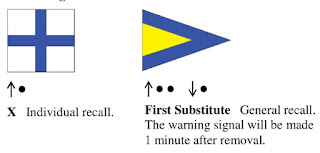
Shortened Course

Changing the Next Leg


Other Signals


The meanings of visual and sound signals are stated below. An arrow printing up or down ( ↑↓) mean that a visual signal is displayed or removed. A dot (⯄) mean a sound; five short dashes ( - - - - - ) mean repetitive sounds; a long dash ( _ ) mean a long sound. When a visual
Postponement Signal

AP over a numeral pennant 1 - 9

Abandonment Signal

Preparatory Signals

Recall Signals

Shortened Course

Changing the Next Leg


Other Signals


2/02/2019
รู้ไหม มีคนไทยเป็นผู้ตัดสินเรือใบระดับโลก ?
รู้ไหม มีคนไทยเป็นผู้ตัดสินเรือใบระดับโลก ?
http://www.sailing.org/tools/documents/GroupingAnnouncementfor2017-[21786].pdf
Facebook : https://www.facebook.com/rut.subniran
http://www.sailing.org/tools/documents/GroupingAnnouncementfor2017-[21786].pdf
 |
| รายนามกรรมการเรือใบระดับโลก มีชื่อ คุณ คุณรุจจน์ ทรัพย์นิรันดร์ |
 |
คุณรุจจน์ ทรัพย์นิรันดร์ |
1/31/2019
เรือใบ OK
เรือใบ OK
ข้อมูลจาก https://en.wikipedia.org/wiki/OK_(dinghy)
ข้อมูลจำเพาะของเรือใบ OK
ผู้เล่น จำนวน : 1 คน
ตัวเรือหนัก (Hull weight) : 72 กก. (159 lb)
ตัวเรือยาว (LOA) : 4 เมตร (13.12 ft)
ตัวเรือกว้าง (Beam) : 1.42 เมตร (4 ft 8 in)
พื้นที่ใบเรือ (Mainsail area) : 8.95 ตร.ม. (96.3 sq ft)
ประวัติเรือใบ OK
เมื่อ พ.ศ.2500 (ค.ศ.1957) นาย Axel Dangaard Olsen อาศัยใน รัฐ Seattle ประเทศสหรัฐอเมริกา ได้ให้ นาย Knud Olsen นักออกแบบเรือใบชาวเดนมาร์ก ให้ออกแบบเรือใบที่สร้างด้วยไม้อัด เล่นคนเดียว เบา และเร็ว และได้ตั้งชื่อว่า O.K. ซึ่งเป็นตัวย่อชื่อกลับกันของ นาย Knud Olsen นั่นเอง
เรือใบ OK ถูกสร้างเพื่อที่จะเข้าร่วมแข่งขันในกีฬาโอลิมปิค เพื่อเทียบเคียงเรือใบ Finn ซึ่งมีใบเดียวหมุนได้ ไม่ต้องใช้สายยึด (Stay) และเสางอได้
ตัวเรือของ เรือใบ OK อาจสร้างด้วย ไม้อัด G.R.P และสร้างประกอบอื่น ๆ ก็ได้ รวมถึงการเลือกใช้อุปกรณ์ประกอบตัวเรือได้อย่างอิสระ เช่น เสา (Mast) ใบ และอุปกรณ์อื่น ได้ตามที่คลาสของเรือกำหนดและรวมถึงผสมผสานความต้องการของแต่ละบุคคลก็ได้ จะเห็นได้ว่า ผู้ออกแบบเรือ OK สามารถใส่รายละเอียดความต้องการของตัวเองได้ นอกจากรูปทรงของตัวเรือที่ต้องเป็นไปตามที่กำหนด เพื่อให้เรือใบ OK สามารถมีอายุยืนนาน โดยเรือเก่า ๆ แค่ปรับเปลี่ยนอุปกรณ์ประกอบ (Rig) และปรับแต่งเล็กน้อยเพื่อให้ใช้แข่งขันได้ โดยเฉพาะเมื่อระบบห้องลอยแบบใหม่
ในระหว่าง พ.ศ.2503 - 2513 (ค.ศ.1960 - 1970) เรือใบ OK ก็ประสบความสำเร็จ มีจำนวนเรือ ประมาณ 10,000 ลำ มีการแข่งขันใหญ่ขึ้น ๆ เรื่อยมา จนถึง พ.ศ.2523 (ค.ศ.1980) เรือใบ Laser เป็นเรือใบแบบ One-design เล่นคนเดียว ซึ่งมีผลกระทต่อความนิยมเรือใบ OK
ในแถบประเทศยุโรปตะวันตก เรือใบ OK เป็นเรือใบเล่นคนเดียวสำหรับเยาวชนอย่างเป็นทางการ โดยหลังจากระบบสังคมพังทลาย บรรดานักแล่นใบเฒ่าก็กลับมาแล่นเรือใบที่เคยเล่นสมัยเป็นเยาวชน โดยเดี๋ยวนี้มีเรือเป็นของตัวเองแทนที่จะใช้เรือของสโมสร
พ.ศ.2546 (ค.ศ.2003) มีเสา Carbon fibre เกิดขึ้น
พ.ศ.2548 (ค.ศ.2005) เกิดการฟื้นฟู คลาสของเรือใบ OK ใหม่ เรือจำนวนมาก ถูกปัดฝุ่นซ่อมแซม และปรับปรุง มีการต่อเรือใบ ๆ ขึ้นเพื่อร่วมการแข่งขันเรือใบระดับสโมสร
ใน เดือน กรกฎาคม พ.ศ.2550 ครบรอบ 50 ปีของการออกแบบเรือใบ OK มีการแข่งขันชิงแชมป์โลกเรือใบ OK ที่ใหญ่ที่สุด ที่ หมู่บ้าน Leba ย่านชายฝั่งของโปแลนด์
 |
| สัญลักษณ์ ของ เรือใบ OK |
 |
| เรือใบ OK |
ข้อมูลจำเพาะของเรือใบ OK
ผู้เล่น จำนวน : 1 คน
ตัวเรือหนัก (Hull weight) : 72 กก. (159 lb)
ตัวเรือยาว (LOA) : 4 เมตร (13.12 ft)
ตัวเรือกว้าง (Beam) : 1.42 เมตร (4 ft 8 in)
พื้นที่ใบเรือ (Mainsail area) : 8.95 ตร.ม. (96.3 sq ft)
ประวัติเรือใบ OK
เมื่อ พ.ศ.2500 (ค.ศ.1957) นาย Axel Dangaard Olsen อาศัยใน รัฐ Seattle ประเทศสหรัฐอเมริกา ได้ให้ นาย Knud Olsen นักออกแบบเรือใบชาวเดนมาร์ก ให้ออกแบบเรือใบที่สร้างด้วยไม้อัด เล่นคนเดียว เบา และเร็ว และได้ตั้งชื่อว่า O.K. ซึ่งเป็นตัวย่อชื่อกลับกันของ นาย Knud Olsen นั่นเอง
เรือใบ OK ถูกสร้างเพื่อที่จะเข้าร่วมแข่งขันในกีฬาโอลิมปิค เพื่อเทียบเคียงเรือใบ Finn ซึ่งมีใบเดียวหมุนได้ ไม่ต้องใช้สายยึด (Stay) และเสางอได้
ตัวเรือของ เรือใบ OK อาจสร้างด้วย ไม้อัด G.R.P และสร้างประกอบอื่น ๆ ก็ได้ รวมถึงการเลือกใช้อุปกรณ์ประกอบตัวเรือได้อย่างอิสระ เช่น เสา (Mast) ใบ และอุปกรณ์อื่น ได้ตามที่คลาสของเรือกำหนดและรวมถึงผสมผสานความต้องการของแต่ละบุคคลก็ได้ จะเห็นได้ว่า ผู้ออกแบบเรือ OK สามารถใส่รายละเอียดความต้องการของตัวเองได้ นอกจากรูปทรงของตัวเรือที่ต้องเป็นไปตามที่กำหนด เพื่อให้เรือใบ OK สามารถมีอายุยืนนาน โดยเรือเก่า ๆ แค่ปรับเปลี่ยนอุปกรณ์ประกอบ (Rig) และปรับแต่งเล็กน้อยเพื่อให้ใช้แข่งขันได้ โดยเฉพาะเมื่อระบบห้องลอยแบบใหม่
ในระหว่าง พ.ศ.2503 - 2513 (ค.ศ.1960 - 1970) เรือใบ OK ก็ประสบความสำเร็จ มีจำนวนเรือ ประมาณ 10,000 ลำ มีการแข่งขันใหญ่ขึ้น ๆ เรื่อยมา จนถึง พ.ศ.2523 (ค.ศ.1980) เรือใบ Laser เป็นเรือใบแบบ One-design เล่นคนเดียว ซึ่งมีผลกระทต่อความนิยมเรือใบ OK
ในแถบประเทศยุโรปตะวันตก เรือใบ OK เป็นเรือใบเล่นคนเดียวสำหรับเยาวชนอย่างเป็นทางการ โดยหลังจากระบบสังคมพังทลาย บรรดานักแล่นใบเฒ่าก็กลับมาแล่นเรือใบที่เคยเล่นสมัยเป็นเยาวชน โดยเดี๋ยวนี้มีเรือเป็นของตัวเองแทนที่จะใช้เรือของสโมสร
พ.ศ.2546 (ค.ศ.2003) มีเสา Carbon fibre เกิดขึ้น
พ.ศ.2548 (ค.ศ.2005) เกิดการฟื้นฟู คลาสของเรือใบ OK ใหม่ เรือจำนวนมาก ถูกปัดฝุ่นซ่อมแซม และปรับปรุง มีการต่อเรือใบ ๆ ขึ้นเพื่อร่วมการแข่งขันเรือใบระดับสโมสร
ใน เดือน กรกฎาคม พ.ศ.2550 ครบรอบ 50 ปีของการออกแบบเรือใบ OK มีการแข่งขันชิงแชมป์โลกเรือใบ OK ที่ใหญ่ที่สุด ที่ หมู่บ้าน Leba ย่านชายฝั่งของโปแลนด์
9/07/2018
การแข่งขันเรือใบ DONGTAN CLASSIC 2018

ระหว่าง 22 - 23 ก.ย.61 สโมสรเรือใบกองเรือยุทธการ ประกาศ จัดการแข่งขันแล่นใบ รายการ Dongtan Classic Regatta 2018 ณ หาดดงตาล อ.สัตหีบ จ.ชลบุรี โดยจัดแข่งขัน 3 ประเภท คือ เรือใบ OK เรือใบ Laser และเรือใบ Optimist รายละเอียดตามประกาศ


ใบสมัคร

Subscribe to:
Posts (Atom)