PART 1
FUNDAMENTAL RULES
1. SAFETY
1.1 Helping Those in Danger
A boat or competitor shall give all possible help to any person of vessel in danger.
1.2 Life-Saving Equipment and Personal Flotatin Device
A boat shall carry adequate life-saving equipment for all persons on board, including one item ready for immediate use, unless her class rules make some other provision. Each competitor is individually responsible for wearing a personal flotation device adequate for the conditions.
2 FAIR SAILING
A boat and her owner shall compete in compliance with recognized principles of sportsmanship and fair play. A boat may be penalized under this rule only if it is clearly established that these principles have been violated. The penalty shall be either disqualification or disqualification that is not excludable.
3 ACCEPTANCE OF THE RULES
3.1 (a) By participating or internding to participate in a race conducted under these rules, each competitor and boat owner agrees to accept these rules.
(b) A support person by providing support, or a parent or guardian by permitting their child to enter a race, agrees to accept the rules.
3.2 Each competitor and boat owner agrees, on behalf of their support persons, that such support persons are bound by the rules.
3.3 Acceptance of the rules includes agreement
(a) to be governed by the rules;
(b) to accept the penalties imposed and other action taken under the rules, subject to the appeal and review procedures provided in them, as the final determination of any matter arising under the rules;
(c) with respect to any such determination, not to resort to any court of law or tribunal not provided for in the rules; and
(d) by each competitor and boat owner to ensure that their support persons are aware of the rules.
3.4 The person is charge of each boat shall ensure that all competitors in the crew and the boat's owner are aware of their responsibilities under this rule.
3.5 This rule may be changed by a prescription of the national authority of the venue.
4. DECISION TO RACE
The responsibility for a boat's decision to participate in a race or to continue racing is hers alone.
5. ANTI-DOPING
A competitor shall comply with the World Anti-Doping Code, the rules of the World Anti-Doping Agency, and World Sailing Regulation 21, Anti-Doping Code An alleged or actual breach of this rule shall be dealt with under Regulation 21. It shall not be grounds for a protest and rule 63.1 does not apply.
6. BETTING AND ANTI-CORRUPTION
Each competitor, boat owner and support person shall compl with World Sailing Regulation 37, Betting and Anti-Corruption Code. An alleged or actual breach of this rule shall be dealt with under Regulation 37. It shall not be grounds for a protest and rule 63.1 does not apply.
7. DISCIPLINARY CODE
Each competitor, boat owner and support person shall comply with World Sailing Regulation 35, Disciplinary, Appeals and Review Code (referred to as 'Disciplinary Code' elsewhere). An alleged or actual breach of this rule shall be dealt with under Regulation 35. It shall not be grounds for a protest and rule 63.1 does not apply.

9/11/2019


RRS2017-2020 : BASIC PRINCIPLES
BASIC PRINCIPLES
Competitors in the sport of sailing are governed by a body of rules that they are expected to follow and enforce. A fundamental principle of sportsmanship is that when competitors break a rule they will promptly take a penalty, which may be to retired.
ENVIRONMENTAL RTESPONSIBILITY
Participants are encouraged to minimize any adverse environmental impact of the sport of sailing.
Competitors in the sport of sailing are governed by a body of rules that they are expected to follow and enforce. A fundamental principle of sportsmanship is that when competitors break a rule they will promptly take a penalty, which may be to retired.
ENVIRONMENTAL RTESPONSIBILITY
Participants are encouraged to minimize any adverse environmental impact of the sport of sailing.
RRS2017-2020 : DEFINITIONS
DEFINITIONS
A term used as stated below is shown in italic type or, in preambles, in bold italic type. The meaning of serveral other terms is given in Terminology in the Introduction.
Abandon A race that a race committee or protest committee abandons is void but may be resaild.
Clear Astern and Clear Ahead; Overlap One boat is clear astern of another when her hull and equipment in normal position are behind a line abeam from the aftermost point of the other boat's hull and equipment in normal position. The other boat is clear ahead. The overlap when neither is clear astern. However, they also overlap when a boat between them overlaps both. These terms always apply to boats on the sam tack. They apply to boat on opposite tacks only when rule 18 applies between them or when boat boats are sailing more than ninety degrees from the true wind.
Conflict of Interest A person has a conflict of interest if he
(a) may gain or lose as a result of a decision to which he contributes,
(b) may reasonably appear to have a personal or financial interest which could affect his ability to be impartial, or
(c) has a close personal interest in a decision.
Fetching A boat is fetching a mark when she is in a position to pass to windward of it and leave it on the required side without changin tack.
Finish A boat finishes whe any part of her hull, or crew or equipment in normal position, crosses the finishing line from the course side. However, she has no finished if after crossing the finishing line she
(a) taskes a penalty under rule 44.2,
(b) corrects an error under rule 28.2 made at the line, or
(c) continues to sail the course.
Keep Clear A boat keeps clear of a right-of-way boat
(a) if the right-of-way boat can sail her course with no need to tak avoiding action and,
(b) when the boats are overlapped, if the right-of-way boat can also change course in both directions without immediately making contact.
Leeward and Windward A boat's leeward side is the side that is or, when she is head to wind, was away from the wind. However, when sailing by the lee or directly downwind, her leeward side is the side on which hermainsail lies. The other side is her windward side.of the other is the leeward boat. The other is the windward boat.
Mark An object the sailing instructions require a boat to leave on a specified side, and race committee vessel surrounded by navigable water from which the starting or finishing line extends. An anchor line or an object attached accidentally to a mark is not part of it.
Mark-Room Room for a boat to leave a mark oh the required side. Also
(a) room to sail to the mark when her proper course is to sail close to it, and
(b) room to round the mark as necessary to sail the course.
However, mark-room for a boat does not include room to tack unless she is overlapped inside and to windward of the boat requiere to give mark-room and she would be fetching the mark after her tack.
Obstruction An object that a boat could not pass without changing course substantially, if she were sailing directly towards it and one of her hull lengths from it. An object that can be safely passed on only one side and an area so designated by the sailing instructions are also obstructions. However a boat racing is not an obstruction to other boats unless they are required to keep clear of her or, if rule 23 applies, avoid her. A vessel under way, including a boat racing, is never a continuing obstruction.
Overlap See Clear Astern and Clear Ahead; Overlap.
Party A party to a hearing is
(a) for a protest hearing: a protester, a protestee;
(b) for a request for redress: a boat requesting redress or for which redress is request, a race committee acting under rule 60.2(b), a technical committe acting under rule 60.4(b);
(c) for a request for redress under rule 62.1(a): the body alleged to have made an improper action or omission;
(d) a person against whom a allegation of a breach of rule 69 is made; a person presenting an allegation under rule 69;
(e) a support person subject to a hearing under rule 60.3(d).
However, the protest committee is never a party.
Postpon A postponed race is delayed before its scheduled start but may be started or abandoned later
Proper Course A course a boat would sail to finish as soon as posible in the absence of the other boats referred to in the rule using the term. A boat has no proper course before her starting signal.
Protest An allegation made under rule 61.2 by a boat, a race committee, a technical committee or a protest committee that a boat has broken a rule.
Racing Aboat is racing from her preparatory signal until she finishes and clears the finishing line and marks or retires, or until the race committee signals a general recall, postponement or abandonment.
Room The space a boat needs in the existing conditions, including space to comply with her obligations under the rules of Part 2 and rule 31, while manoeuvring promptly in seamanlike wy.
Rule
(a) The rules in this book, including the Definitions, Race Signals, Introduction, preambles and the rules of relevant appendices, but not tiles;
(b) World Sailing Advertising Code, Anti-Doping Code, Betting and Anti Corruption Code, Disciplinary code, Eligibility Code, Sailor Classification Code, respectively Regulations 20, 21, 37, 35, 19 and 22;
(c) the prescriptions of the national authority, unless they are changed by the notice of race or sailing instructions in compliance with the national authority's precription, if any, to rule 88.2;
(d) the class rules (for a boat racing under a handicap or rating system, the rules of that system are 'class rules');
(e) the notice of race;
(f) the sailing instructions; and
(g) any other documents that govern the even.
Start A boat starts when, having been entirely on the pre-start side of the starting line at or after her starting signal, and having complied with rule 30.1 if it applies, any part of her hull, crew or equipment crosses the starting line in the direction of the first mark;
Support Person Any person who
(a) provides, or may provide, physical or advisory support to a competitor, including any coach, trainer, manager, team staff, medic, paramedic or any other person working with, treating or assisting a competitor in or preparing for the competition, or
(b) is the parent or guardian of a competitor
Tack, Starboard or Port a boat is on the tack, starboard or port, corresponding to her windward side
Windard See Leeward and Windward.
Zone The area around a mark within a distance of three hull lengths of the boat nearer to it. A boat is zone.
A term used as stated below is shown in italic type or, in preambles, in bold italic type. The meaning of serveral other terms is given in Terminology in the Introduction.
Abandon A race that a race committee or protest committee abandons is void but may be resaild.
Clear Astern and Clear Ahead; Overlap One boat is clear astern of another when her hull and equipment in normal position are behind a line abeam from the aftermost point of the other boat's hull and equipment in normal position. The other boat is clear ahead. The overlap when neither is clear astern. However, they also overlap when a boat between them overlaps both. These terms always apply to boats on the sam tack. They apply to boat on opposite tacks only when rule 18 applies between them or when boat boats are sailing more than ninety degrees from the true wind.
Conflict of Interest A person has a conflict of interest if he
(a) may gain or lose as a result of a decision to which he contributes,
(b) may reasonably appear to have a personal or financial interest which could affect his ability to be impartial, or
(c) has a close personal interest in a decision.
Fetching A boat is fetching a mark when she is in a position to pass to windward of it and leave it on the required side without changin tack.
Finish A boat finishes whe any part of her hull, or crew or equipment in normal position, crosses the finishing line from the course side. However, she has no finished if after crossing the finishing line she
(a) taskes a penalty under rule 44.2,
(b) corrects an error under rule 28.2 made at the line, or
(c) continues to sail the course.
Keep Clear A boat keeps clear of a right-of-way boat
(a) if the right-of-way boat can sail her course with no need to tak avoiding action and,
(b) when the boats are overlapped, if the right-of-way boat can also change course in both directions without immediately making contact.
Leeward and Windward A boat's leeward side is the side that is or, when she is head to wind, was away from the wind. However, when sailing by the lee or directly downwind, her leeward side is the side on which hermainsail lies. The other side is her windward side.of the other is the leeward boat. The other is the windward boat.
Mark An object the sailing instructions require a boat to leave on a specified side, and race committee vessel surrounded by navigable water from which the starting or finishing line extends. An anchor line or an object attached accidentally to a mark is not part of it.
Mark-Room Room for a boat to leave a mark oh the required side. Also
(a) room to sail to the mark when her proper course is to sail close to it, and
(b) room to round the mark as necessary to sail the course.
However, mark-room for a boat does not include room to tack unless she is overlapped inside and to windward of the boat requiere to give mark-room and she would be fetching the mark after her tack.
Obstruction An object that a boat could not pass without changing course substantially, if she were sailing directly towards it and one of her hull lengths from it. An object that can be safely passed on only one side and an area so designated by the sailing instructions are also obstructions. However a boat racing is not an obstruction to other boats unless they are required to keep clear of her or, if rule 23 applies, avoid her. A vessel under way, including a boat racing, is never a continuing obstruction.
Overlap See Clear Astern and Clear Ahead; Overlap.
Party A party to a hearing is
(a) for a protest hearing: a protester, a protestee;
(b) for a request for redress: a boat requesting redress or for which redress is request, a race committee acting under rule 60.2(b), a technical committe acting under rule 60.4(b);
(c) for a request for redress under rule 62.1(a): the body alleged to have made an improper action or omission;
(d) a person against whom a allegation of a breach of rule 69 is made; a person presenting an allegation under rule 69;
(e) a support person subject to a hearing under rule 60.3(d).
However, the protest committee is never a party.
Postpon A postponed race is delayed before its scheduled start but may be started or abandoned later
Proper Course A course a boat would sail to finish as soon as posible in the absence of the other boats referred to in the rule using the term. A boat has no proper course before her starting signal.
Protest An allegation made under rule 61.2 by a boat, a race committee, a technical committee or a protest committee that a boat has broken a rule.
Racing Aboat is racing from her preparatory signal until she finishes and clears the finishing line and marks or retires, or until the race committee signals a general recall, postponement or abandonment.
Room The space a boat needs in the existing conditions, including space to comply with her obligations under the rules of Part 2 and rule 31, while manoeuvring promptly in seamanlike wy.
Rule
(a) The rules in this book, including the Definitions, Race Signals, Introduction, preambles and the rules of relevant appendices, but not tiles;
(b) World Sailing Advertising Code, Anti-Doping Code, Betting and Anti Corruption Code, Disciplinary code, Eligibility Code, Sailor Classification Code, respectively Regulations 20, 21, 37, 35, 19 and 22;
(c) the prescriptions of the national authority, unless they are changed by the notice of race or sailing instructions in compliance with the national authority's precription, if any, to rule 88.2;
(d) the class rules (for a boat racing under a handicap or rating system, the rules of that system are 'class rules');
(e) the notice of race;
(f) the sailing instructions; and
(g) any other documents that govern the even.
Start A boat starts when, having been entirely on the pre-start side of the starting line at or after her starting signal, and having complied with rule 30.1 if it applies, any part of her hull, crew or equipment crosses the starting line in the direction of the first mark;
Support Person Any person who
(a) provides, or may provide, physical or advisory support to a competitor, including any coach, trainer, manager, team staff, medic, paramedic or any other person working with, treating or assisting a competitor in or preparing for the competition, or
(b) is the parent or guardian of a competitor
Tack, Starboard or Port a boat is on the tack, starboard or port, corresponding to her windward side
Windard See Leeward and Windward.
Zone The area around a mark within a distance of three hull lengths of the boat nearer to it. A boat is zone.
9/10/2019
RRS2017-2020 : INTRODUCTION
INTRODUCTION
The Racing Rules of Sailing includes two main sections. The first, Parts 1-7, contains rules that affect all competitors. The second, the appendices, provides details of rules, rules that apply to particular kinds of racing, and rules that affect only a small number of competitors or officials.
Terminology
A term used in the sense stated in the Definitions is printed in italics or, in preambles, in bold italics (for example, racing and racing).
Each of the terms in the table below is used in The Racing Rules of Sailing with the meaning given.
Other words and terms are used in the sense ordinarily understood in nautical or general use.
Notation The notation '[DP]' in a rule means that the penalty for a breach of the rule may, at the descretion of the protest committee, be less than disqualification. Guidelines for discretionary penalties are available on the World Sailing website.
Revision The racing rules are revised and published evenry four years by World Sailing, the intational authority for the sport. This edition becomes effective on 1 January 2017 except that for an event beginning in 2016 the date may be postponed by the notice of race and sailing instructions. Marginal markings indicate important changes to Parts 1 - 7 and the Definitions in the 2013 - 2016 edition. No changes are contemplated before 2021, but any changes determined to be urgent before then will be announced through national authorities and posted on the World Sailing Website.
Appendices When the rules of an appendix apply, they take precedence over any conflicting rules in Parts 1 - 7 and the Definitions. Each appendix is identified by a letter. A reference to a rule in an appendix will contain the letter and the rule number (for example, 'rule A1'). The letters I, O and Q are not used to designate qppendices in this book.
World Sailing Codes The World Sailing Codes are listed in the table below. The codes are published in the World Sailing Regulations.
These Codes are referred to in the definition Rule but are not included in this book because they can be changed at any time. The most recent versions of the codes are published on the World Sailing website; new versions will be announced through national authorities.
Cases and Calls World Sailing publishes interpretations of the racing rules in The Case Book for 2017 - 2020 and recognizes them as authoritative interpretations and explanations of the rules. It also publishes The Call Book for Match Racing for 2017 - 2020 and The Call Book for Team Racing for 2017 - 2020, and it recognizes them as authoritative only for umpired match or team racing. These publications are available on the World Sailing website.
The Racing Rules of Sailing includes two main sections. The first, Parts 1-7, contains rules that affect all competitors. The second, the appendices, provides details of rules, rules that apply to particular kinds of racing, and rules that affect only a small number of competitors or officials.
Terminology
A term used in the sense stated in the Definitions is printed in italics or, in preambles, in bold italics (for example, racing and racing).
Each of the terms in the table below is used in The Racing Rules of Sailing with the meaning given.
| Term | Meaning |
|---|---|
| Boat | A sailboat and the crew on board. |
| Competitor | A person who races or intends to race in the event. |
| National authority | A World Sailing member national authority. |
| Race committee | The race committee appointed under rule 89.2(c) and any other person or committee performing a race committee function. |
| Racing rule | A rule in The Racing Rules of Sailing. |
| Technical committee | The technical committee appointed under rule 89.2(c) and any other person or committee performing a technical committee function. |
| Vessel | Any boat or ship |
Notation The notation '[DP]' in a rule means that the penalty for a breach of the rule may, at the descretion of the protest committee, be less than disqualification. Guidelines for discretionary penalties are available on the World Sailing website.
Revision The racing rules are revised and published evenry four years by World Sailing, the intational authority for the sport. This edition becomes effective on 1 January 2017 except that for an event beginning in 2016 the date may be postponed by the notice of race and sailing instructions. Marginal markings indicate important changes to Parts 1 - 7 and the Definitions in the 2013 - 2016 edition. No changes are contemplated before 2021, but any changes determined to be urgent before then will be announced through national authorities and posted on the World Sailing Website.
Appendices When the rules of an appendix apply, they take precedence over any conflicting rules in Parts 1 - 7 and the Definitions. Each appendix is identified by a letter. A reference to a rule in an appendix will contain the letter and the rule number (for example, 'rule A1'). The letters I, O and Q are not used to designate qppendices in this book.
World Sailing Codes The World Sailing Codes are listed in the table below. The codes are published in the World Sailing Regulations.
| Title | Racing Rule | Regulation |
| Advertising Code | 80 | 20 |
| Anti-Doping Code | 5 | 21 |
| Betting and anti-Corruption Code | 6 | 37 |
| Disciplinary Code | 7 | 35 |
| Eligibility Code | 75.2 | 19 |
| Sailor Classification Code | 79 | 22 |
Cases and Calls World Sailing publishes interpretations of the racing rules in The Case Book for 2017 - 2020 and recognizes them as authoritative interpretations and explanations of the rules. It also publishes The Call Book for Match Racing for 2017 - 2020 and The Call Book for Team Racing for 2017 - 2020, and it recognizes them as authoritative only for umpired match or team racing. These publications are available on the World Sailing website.
9/09/2019
RRS2017-2020 : RACE SIGNAL
RACE SIGNALS
The meanings of visual and sound signals are stated below. An arrow printing up or down ( ↑↓) mean that a visual signal is displayed or removed. A dot (⯄) mean a sound; five short dashes ( - - - - - ) mean repetitive sounds; a long dash ( _ ) mean a long sound. When a visual
Postponement Signal

AP over a numeral pennant 1 - 9

Abandonment Signal

Preparatory Signals

Recall Signals
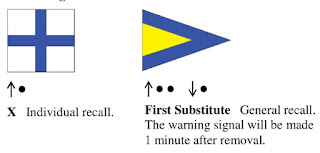
Shortened Course

Changing the Next Leg


Other Signals


The meanings of visual and sound signals are stated below. An arrow printing up or down ( ↑↓) mean that a visual signal is displayed or removed. A dot (⯄) mean a sound; five short dashes ( - - - - - ) mean repetitive sounds; a long dash ( _ ) mean a long sound. When a visual
Postponement Signal

AP over a numeral pennant 1 - 9

Abandonment Signal

Preparatory Signals

Recall Signals

Shortened Course

Changing the Next Leg


Other Signals


2/02/2019
รู้ไหม มีคนไทยเป็นผู้ตัดสินเรือใบระดับโลก ?
รู้ไหม มีคนไทยเป็นผู้ตัดสินเรือใบระดับโลก ?
http://www.sailing.org/tools/documents/GroupingAnnouncementfor2017-[21786].pdf
Facebook : https://www.facebook.com/rut.subniran
http://www.sailing.org/tools/documents/GroupingAnnouncementfor2017-[21786].pdf
 |
| รายนามกรรมการเรือใบระดับโลก มีชื่อ คุณ คุณรุจจน์ ทรัพย์นิรันดร์ |
 |
คุณรุจจน์ ทรัพย์นิรันดร์ |
1/31/2019
เรือใบ OK
เรือใบ OK
ข้อมูลจาก https://en.wikipedia.org/wiki/OK_(dinghy)
ข้อมูลจำเพาะของเรือใบ OK
ผู้เล่น จำนวน : 1 คน
ตัวเรือหนัก (Hull weight) : 72 กก. (159 lb)
ตัวเรือยาว (LOA) : 4 เมตร (13.12 ft)
ตัวเรือกว้าง (Beam) : 1.42 เมตร (4 ft 8 in)
พื้นที่ใบเรือ (Mainsail area) : 8.95 ตร.ม. (96.3 sq ft)
ประวัติเรือใบ OK
เมื่อ พ.ศ.2500 (ค.ศ.1957) นาย Axel Dangaard Olsen อาศัยใน รัฐ Seattle ประเทศสหรัฐอเมริกา ได้ให้ นาย Knud Olsen นักออกแบบเรือใบชาวเดนมาร์ก ให้ออกแบบเรือใบที่สร้างด้วยไม้อัด เล่นคนเดียว เบา และเร็ว และได้ตั้งชื่อว่า O.K. ซึ่งเป็นตัวย่อชื่อกลับกันของ นาย Knud Olsen นั่นเอง
เรือใบ OK ถูกสร้างเพื่อที่จะเข้าร่วมแข่งขันในกีฬาโอลิมปิค เพื่อเทียบเคียงเรือใบ Finn ซึ่งมีใบเดียวหมุนได้ ไม่ต้องใช้สายยึด (Stay) และเสางอได้
ตัวเรือของ เรือใบ OK อาจสร้างด้วย ไม้อัด G.R.P และสร้างประกอบอื่น ๆ ก็ได้ รวมถึงการเลือกใช้อุปกรณ์ประกอบตัวเรือได้อย่างอิสระ เช่น เสา (Mast) ใบ และอุปกรณ์อื่น ได้ตามที่คลาสของเรือกำหนดและรวมถึงผสมผสานความต้องการของแต่ละบุคคลก็ได้ จะเห็นได้ว่า ผู้ออกแบบเรือ OK สามารถใส่รายละเอียดความต้องการของตัวเองได้ นอกจากรูปทรงของตัวเรือที่ต้องเป็นไปตามที่กำหนด เพื่อให้เรือใบ OK สามารถมีอายุยืนนาน โดยเรือเก่า ๆ แค่ปรับเปลี่ยนอุปกรณ์ประกอบ (Rig) และปรับแต่งเล็กน้อยเพื่อให้ใช้แข่งขันได้ โดยเฉพาะเมื่อระบบห้องลอยแบบใหม่
ในระหว่าง พ.ศ.2503 - 2513 (ค.ศ.1960 - 1970) เรือใบ OK ก็ประสบความสำเร็จ มีจำนวนเรือ ประมาณ 10,000 ลำ มีการแข่งขันใหญ่ขึ้น ๆ เรื่อยมา จนถึง พ.ศ.2523 (ค.ศ.1980) เรือใบ Laser เป็นเรือใบแบบ One-design เล่นคนเดียว ซึ่งมีผลกระทต่อความนิยมเรือใบ OK
ในแถบประเทศยุโรปตะวันตก เรือใบ OK เป็นเรือใบเล่นคนเดียวสำหรับเยาวชนอย่างเป็นทางการ โดยหลังจากระบบสังคมพังทลาย บรรดานักแล่นใบเฒ่าก็กลับมาแล่นเรือใบที่เคยเล่นสมัยเป็นเยาวชน โดยเดี๋ยวนี้มีเรือเป็นของตัวเองแทนที่จะใช้เรือของสโมสร
พ.ศ.2546 (ค.ศ.2003) มีเสา Carbon fibre เกิดขึ้น
พ.ศ.2548 (ค.ศ.2005) เกิดการฟื้นฟู คลาสของเรือใบ OK ใหม่ เรือจำนวนมาก ถูกปัดฝุ่นซ่อมแซม และปรับปรุง มีการต่อเรือใบ ๆ ขึ้นเพื่อร่วมการแข่งขันเรือใบระดับสโมสร
ใน เดือน กรกฎาคม พ.ศ.2550 ครบรอบ 50 ปีของการออกแบบเรือใบ OK มีการแข่งขันชิงแชมป์โลกเรือใบ OK ที่ใหญ่ที่สุด ที่ หมู่บ้าน Leba ย่านชายฝั่งของโปแลนด์
 |
| สัญลักษณ์ ของ เรือใบ OK |
 |
| เรือใบ OK |
ข้อมูลจำเพาะของเรือใบ OK
ผู้เล่น จำนวน : 1 คน
ตัวเรือหนัก (Hull weight) : 72 กก. (159 lb)
ตัวเรือยาว (LOA) : 4 เมตร (13.12 ft)
ตัวเรือกว้าง (Beam) : 1.42 เมตร (4 ft 8 in)
พื้นที่ใบเรือ (Mainsail area) : 8.95 ตร.ม. (96.3 sq ft)
ประวัติเรือใบ OK
เมื่อ พ.ศ.2500 (ค.ศ.1957) นาย Axel Dangaard Olsen อาศัยใน รัฐ Seattle ประเทศสหรัฐอเมริกา ได้ให้ นาย Knud Olsen นักออกแบบเรือใบชาวเดนมาร์ก ให้ออกแบบเรือใบที่สร้างด้วยไม้อัด เล่นคนเดียว เบา และเร็ว และได้ตั้งชื่อว่า O.K. ซึ่งเป็นตัวย่อชื่อกลับกันของ นาย Knud Olsen นั่นเอง
เรือใบ OK ถูกสร้างเพื่อที่จะเข้าร่วมแข่งขันในกีฬาโอลิมปิค เพื่อเทียบเคียงเรือใบ Finn ซึ่งมีใบเดียวหมุนได้ ไม่ต้องใช้สายยึด (Stay) และเสางอได้
ตัวเรือของ เรือใบ OK อาจสร้างด้วย ไม้อัด G.R.P และสร้างประกอบอื่น ๆ ก็ได้ รวมถึงการเลือกใช้อุปกรณ์ประกอบตัวเรือได้อย่างอิสระ เช่น เสา (Mast) ใบ และอุปกรณ์อื่น ได้ตามที่คลาสของเรือกำหนดและรวมถึงผสมผสานความต้องการของแต่ละบุคคลก็ได้ จะเห็นได้ว่า ผู้ออกแบบเรือ OK สามารถใส่รายละเอียดความต้องการของตัวเองได้ นอกจากรูปทรงของตัวเรือที่ต้องเป็นไปตามที่กำหนด เพื่อให้เรือใบ OK สามารถมีอายุยืนนาน โดยเรือเก่า ๆ แค่ปรับเปลี่ยนอุปกรณ์ประกอบ (Rig) และปรับแต่งเล็กน้อยเพื่อให้ใช้แข่งขันได้ โดยเฉพาะเมื่อระบบห้องลอยแบบใหม่
ในระหว่าง พ.ศ.2503 - 2513 (ค.ศ.1960 - 1970) เรือใบ OK ก็ประสบความสำเร็จ มีจำนวนเรือ ประมาณ 10,000 ลำ มีการแข่งขันใหญ่ขึ้น ๆ เรื่อยมา จนถึง พ.ศ.2523 (ค.ศ.1980) เรือใบ Laser เป็นเรือใบแบบ One-design เล่นคนเดียว ซึ่งมีผลกระทต่อความนิยมเรือใบ OK
ในแถบประเทศยุโรปตะวันตก เรือใบ OK เป็นเรือใบเล่นคนเดียวสำหรับเยาวชนอย่างเป็นทางการ โดยหลังจากระบบสังคมพังทลาย บรรดานักแล่นใบเฒ่าก็กลับมาแล่นเรือใบที่เคยเล่นสมัยเป็นเยาวชน โดยเดี๋ยวนี้มีเรือเป็นของตัวเองแทนที่จะใช้เรือของสโมสร
พ.ศ.2546 (ค.ศ.2003) มีเสา Carbon fibre เกิดขึ้น
พ.ศ.2548 (ค.ศ.2005) เกิดการฟื้นฟู คลาสของเรือใบ OK ใหม่ เรือจำนวนมาก ถูกปัดฝุ่นซ่อมแซม และปรับปรุง มีการต่อเรือใบ ๆ ขึ้นเพื่อร่วมการแข่งขันเรือใบระดับสโมสร
ใน เดือน กรกฎาคม พ.ศ.2550 ครบรอบ 50 ปีของการออกแบบเรือใบ OK มีการแข่งขันชิงแชมป์โลกเรือใบ OK ที่ใหญ่ที่สุด ที่ หมู่บ้าน Leba ย่านชายฝั่งของโปแลนด์
9/07/2018
การแข่งขันเรือใบ DONGTAN CLASSIC 2018

ระหว่าง 22 - 23 ก.ย.61 สโมสรเรือใบกองเรือยุทธการ ประกาศ จัดการแข่งขันแล่นใบ รายการ Dongtan Classic Regatta 2018 ณ หาดดงตาล อ.สัตหีบ จ.ชลบุรี โดยจัดแข่งขัน 3 ประเภท คือ เรือใบ OK เรือใบ Laser และเรือใบ Optimist รายละเอียดตามประกาศ


ใบสมัคร

8/31/2018
สิงหาคม 2561 ไม่ได้มากันเล่น ๆ
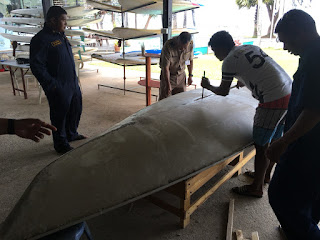
ข้าราชการ ช่วยราชการ คณะกรรมการเรือใบและวินด์เซิร์ฟ ทร. ทำงานด้วยจิตใจมุ่งมั่น




Subscribe to:
Posts (Atom)